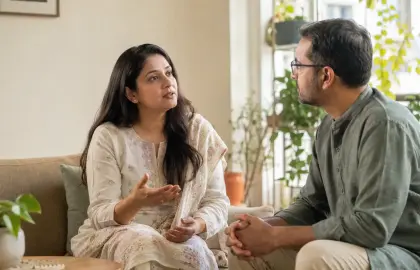

How Self-Image Affects Emotional Comfort in Relationships
Self-image affects emotional comfort because the way people see themselves often shapes how they receive love, reassurance, attention, and closeness. When someone feels secure within themselves, connection may feel easier. When self-image is fragile, even kind words or care from a partner may feel doubtful, uncomfortable, or hard to fully accept.
Your Self-Image Becomes an Inner Filter
Self-image is not only about appearance. It is the private story a person carries about their value, attractiveness, worth, personality, and place in a relationship.
That story can quietly influence how they interpret love.
If someone sees themselves as “not enough,” they may struggle to believe reassurance. If they feel unworthy of care, they may question kind gestures. If they carry past criticism, they may hear judgment even when no judgment is intended.
This is why emotional comfort is not only created by what a partner says. It is also shaped by how the person receives it.
A partner may say, “You look nice today,” but the person may think, “They are only saying that to make me feel better.”
A partner may show affection, but the person may wonder, “Do they really mean it?”
A partner may be quiet because they are tired, but the person may assume, “Maybe they are losing interest.”
This does not mean the person is weak or dramatic. It often means their self-image is filtering the relationship before they can feel fully relaxed inside it.
The Inner Filter Loop
A useful way to understand this is the Inner Filter Loop.
What I believe about myself
The private thought: “I am not enough,” “I am difficult to love,” or “I do not look or act the way I should.”
How I interpret my partner
The reaction: “They must be judging me,” “They are not interested,” or “They are only being polite.”
How I behave in the relationship
The response: pulling away, needing repeated reassurance, becoming guarded, or avoiding honest closeness.
In simple words, self-image becomes a filter between love given and love received.
Sometimes the relationship is not lacking care. The person may simply find it hard to believe that care is real.
That gap can slowly affect emotional comfort.
When Compliments Do Not Feel Easy to Believe
A person with a fragile self-image may not reject love directly. They may reject it quietly inside.
They may laugh off compliments. They may change the topic when appreciated. They may feel awkward when their partner gives attention. They may need reassurance but still not trust it when it comes.
In many Bangladeshi families, casual comments about appearance, marriage, weight, income, or “how well someone is managing” can stay in a person’s mind longer than people realize.
These comments may look small from outside.
But if repeated, they can settle inside a person’s mind.
Later, even in a caring relationship, those old messages may return. The person may not be responding only to their partner. They may be responding to years of comparison, criticism, or feeling measured.
That is why reassurance sometimes needs more than one sentence. It also needs emotional patience.
How Self-Image Can Make People Emotionally Guarded
When someone feels unsure about themselves, they may try to protect their emotions.
They may avoid showing too much need. They may hide insecurity. They may act stronger than they feel. They may keep emotional distance because closeness feels risky.
This can confuse the partner.
One person may think, “Why are they pulling away when I am trying to care?”
The other may think, “If I let them see my insecurity, they may think less of me.”
This is how self-image affects emotional comfort. It can make closeness feel like exposure instead of connection.
A person may want affection but feel nervous receiving it. They may want to talk honestly but fear sounding needy. They may want comfort but worry they will become a burden.
In some Bangladeshi relationships, people are also taught to adjust silently. So instead of saying, “I feel insecure,” they may stay quiet and hope the feeling disappears.
But silence rarely gives insecurity a safe place to heal.
The Common Mistake: Thinking Self-Image Is Only Personal
Self-image is personal, but it does not stay private.
It enters the relationship through reactions, expectations, and emotional habits.
For example, if someone feels unworthy, they may constantly test whether their partner still cares. If someone feels ashamed of normal changes in life, they may avoid being emotionally open. If someone believes they are difficult to love, they may treat small disagreements as proof that the relationship is unsafe.
The partner may not understand what is happening.
They may only see mood changes, distance, or repeated doubt.
This is why self-image matters in relationships. It can change the emotional climate between two people.
| Self-image concern | How it may show in a relationship |
|---|---|
| “I am not enough.” | Difficulty trusting reassurance |
| “I may be judged.” | Avoiding honest emotional expression |
| “I have changed too much.” | Feeling uncomfortable with attention |
| “Others are better than me.” | Comparing the relationship with others |
| “I am hard to love.” | Pulling away before being rejected |
These patterns are not character flaws. They are signals that the person may need more self-understanding and support.
When Comparison Steals Emotional Comfort
Comparison is one of the fastest ways self-image becomes unstable.
A person may compare their appearance, lifestyle, marriage, career, confidence, or personality with others. Social media can make this worse because it shows selected moments, not full lives.
In Bangladesh, comparison can also come from family gatherings, relatives’ comments, community expectations, or marriage-related pressure. Someone may feel judged for how they look, how they behave, how much they earn, or how well they seem to manage life.
The problem with comparison is that it makes emotional comfort conditional.
A person may feel comfortable only when they feel “good enough.” But on difficult days, they may feel less deserving of affection or closeness.
That is a painful way to live inside a relationship.
A healthier relationship should not require someone to feel perfect before they feel accepted. Emotional comfort grows when a person can be human, changing, imperfect, and still treated with care.
Is the Partner Rejecting You, or Is Your Self-Image Interpreting It That Way?
This is a difficult but useful question.
Not every uncomfortable feeling comes from the partner’s behavior. Sometimes the feeling comes from past criticism, fear, comparison, or inner doubt.
That does not mean the feeling is fake. It means the feeling may need careful understanding before reacting.
A person can ask:
• Did my partner actually say something hurtful?
• Am I assuming judgment without clear evidence?
• Have I felt this insecurity before in other situations?
• Am I reacting to the present moment or an old fear?
• Do I need reassurance, or do I need a deeper conversation?
• Can I explain this feeling without blaming my partner?
These questions are not for self-blame.
They are for emotional clarity.
Sometimes a partner does need to be more thoughtful. Sometimes the person also needs to notice how their self-image is shaping the moment. Both can be true.
How to Build More Emotional Comfort From the Inside
Improving emotional comfort does not mean forcing yourself to “be confident” overnight. That kind of advice is useless.
Real change is slower.
It may begin with noticing the inner filter. When a kind word feels hard to believe, pause and ask, “Why does this feel difficult to receive?”
It may also help to speak more honestly.
Instead of saying, “You do not care,” someone might say, “I know you are trying, but sometimes I struggle to believe reassurance.”
Instead of hiding discomfort, they might say, “I feel insecure about this, and I need a little patience.”
These sentences are simple, but they reduce confusion.
A caring partner cannot support what they are never allowed to understand.
At the same time, no partner should be expected to repair someone’s entire self-image alone. Emotional support matters, but personal self-worth also needs inner work, reflection, and sometimes professional guidance.
A Healthier Way to See Yourself in a Relationship
A relationship should not become a mirror that decides your worth every day.
Your partner’s attention can feel meaningful. Their affection can feel reassuring. Their words can support you.
But your value should not depend only on whether you feel admired, noticed, or praised at every moment.
A healthier self-image says:
“I may have insecurities, but I am still worthy of care.”
“I may change over time, but I do not lose value.”
“I can receive love without needing to be perfect.”
“I can talk about my insecurity without turning it into blame.”
This kind of self-perception creates more emotional ease.
It allows closeness to feel less like a test and more like a shared space.
The Softest Relationships Still Need Inner Security
Self-image affects emotional comfort because it shapes what people believe they deserve.
When a person sees themselves with constant criticism, love can feel suspicious. When they begin to see themselves with more fairness, closeness becomes easier to receive.
The goal is not to feel confident every day. No one does.
The goal is to stop letting self-doubt speak louder than every kind action.
A relationship can offer care, but the heart also needs permission to accept it.
Sometimes emotional comfort begins with a quiet decision: “I do not have to be perfect to be loved with respect.”
Key Takeaways
• Self-image affects how people receive love, reassurance, and emotional closeness.
• A fragile self-image can make care feel doubtful, awkward, or hard to trust.
• Comparison, past criticism, family comments, and social pressure can shape self-perception.
• Emotional discomfort does not always mean the relationship is failing.
• Honest conversation can help partners understand insecurity without blame.
• A healthier self-image allows people to feel accepted without needing to be perfect.
When to Seek Professional Help
Consider professional support if self-image concerns lead to ongoing distress, shame, fear, emotional withdrawal, repeated conflict, hopelessness, trauma-related reactions, or difficulty feeling safe in relationships.
Support may also help if negative self-thoughts feel constant, reassurance never feels believable, or insecurity affects daily life and emotional wellbeing for a long time.
Seeking help does not mean weakness. It means your emotional comfort deserves proper care.
Safety Note
This article is for general education only and is not a substitute for medical, psychological, or relationship counselling. If you are experiencing ongoing distress, pain, pressure, fear, abuse, trauma, or serious relationship conflict, consider speaking with a qualified professional or trusted support person.