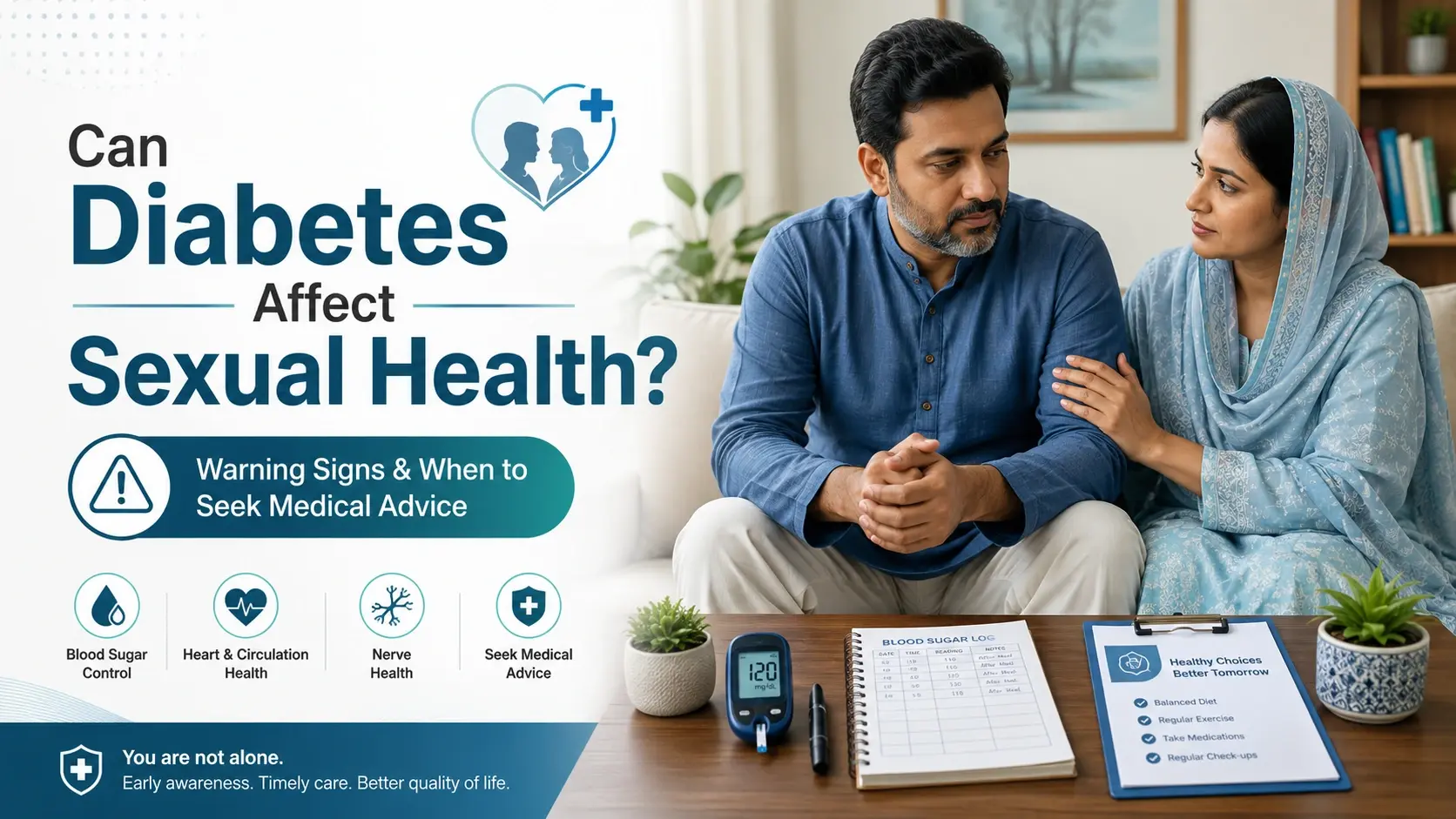
Can Diabetes Affect Sexual Health? Warning Signs and When to Seek Medical Advice
Diabetes can affect more than blood sugar numbers. Over time, it may also influence energy, mood, blood flow, nerve health, confidence, and relationship comfort. For some people, these changes can quietly affect sexual health.
This does not mean everyone with diabetes will face sexual wellness concerns. It also does not mean every change in sexual health is caused by diabetes. Stress, poor sleep, medication side effects, heart health, hormones, age, and relationship pressure may also play a role.
Still, diabetes is worth taking seriously because long-term blood sugar problems can affect different parts of the body. NIDDK explains that high blood glucose can damage blood vessels and nerves, and this damage may lead to sexual and bladder problems. It also advises people to work with their healthcare team if they have these concerns.
This article is for health education and awareness. It is not a diagnosis or treatment plan. The goal is to explain what men and women should know, what signs deserve attention, and when it is better to speak with a qualified healthcare professional.
Quick Answer
Diabetes may affect sexual health in men and women by influencing blood flow, nerve health, hormones, energy, mood, and confidence. Men may notice erection-related concerns, while women may notice changes in desire, comfort, response, or recurring infections. These concerns can have many causes, so ongoing, painful, or distressing changes should be discussed privately with a qualified healthcare professional.
Diabetes, Blood Sugar, and Sexual Wellness
Sexual health depends on several body systems working together. Blood flow, nerve signals, hormones, mood, energy, and emotional comfort all matter. Diabetes can sometimes affect these areas, especially when blood sugar levels remain higher than recommended over time.
That is why diabetes-related sexual health concerns should not be dismissed as “only stress” or “only age.” At the same time, it is also wrong to assume diabetes is always the cause. A proper health review matters because the same concern can come from several directions.
For example, someone with diabetes may also be dealing with poor sleep, high work pressure, heart health concerns, medication changes, weight changes, or relationship stress. Any of these may affect energy or sexual wellness.
The useful way to think about it is simple: diabetes may be one important part of the bigger health picture, not the only piece.
Why Blood Flow and Nerve Health Matter
Blood flow and nerve health are important for sexual wellness. Diabetes may affect both. NIDDK explains that diabetes-related nerve damage can affect parts of the body involved in sexual and urinary function, and high blood glucose can damage blood vessels and nerves.
This is why some people with diabetes may notice changes in body response, comfort, sensation, or confidence. The change may happen slowly, so people may not connect it with diabetes at first.
Heart health also matters here. Blood vessels are connected throughout the body. If diabetes is linked with high blood pressure, high cholesterol, smoking, or heart disease risk, sexual wellness concerns may sometimes be part of a broader circulation issue.
That does not mean the reader should panic. It means sexual health changes should be taken seriously enough to discuss with a healthcare professional, especially when diabetes or heart health concerns are already present.
What Men With Diabetes May Notice
Men with diabetes may experience erection-related concerns, lower desire, energy changes, or confidence issues. CDC explains that diabetes can increase the risk of erectile dysfunction because high blood sugar may damage nerves and blood vessels needed for erection. CDC also states that men with diabetes are three times more likely to have erectile dysfunction.
This does not mean every man with diabetes will have this problem. It also does not mean every erection-related concern is caused by diabetes. NHS notes that occasional erection difficulty may happen because of stress, tiredness, or alcohol, but if it happens often, it may be linked with conditions such as diabetes, high blood pressure, high cholesterol, depression, anxiety, or hormone problems.
Men should pay attention if changes happen repeatedly, become worse, or affect confidence and relationship comfort. The right step is not to feel ashamed or search for random products. The right step is to speak with a qualified doctor.
A simple way to explain it is:
“I have diabetes and I have noticed changes in my sexual health. Could this be related to blood sugar, circulation, medicine, or another health issue?”
That is enough. A doctor can ask the right questions and decide what needs checking.
What Women With Diabetes May Notice
Women with diabetes may also experience sexual health changes, but this side is often discussed less openly. That gap matters, because women’s concerns deserve the same attention.
NIDDK explains that women with diabetes may experience changes in desire or response, dryness, discomfort, yeast infections, bladder infections, pregnancy concerns, or fertility-related concerns. It also notes that nerve damage, reduced blood flow, hormonal changes, high or low blood glucose, tiredness, depression, and anxiety may all be involved.
CDC also explains that women with diabetes have a higher risk of yeast infections and urinary tract infections, especially when blood sugar levels are high. It also notes that diabetes can lower interest in sex or the ability to enjoy it, and that vaginal dryness may make intimacy uncomfortable or painful for some women.
For women, the concern may not always sound like “sexual dysfunction.” It may feel like discomfort, low interest, emotional distance, reduced confidence, repeated infections, or simply feeling less like yourself.
Women should not silently tolerate these issues because of embarrassment. If a change is ongoing, painful, distressing, or linked with diabetes, it deserves medical attention.
Energy, Mood, and Relationship Confidence
Diabetes can affect daily energy. Blood sugar changes, poor sleep, stress, medication routines, and worry about health may all make a person feel tired or emotionally overloaded.
This can affect relationship confidence. A person may still care about their partner but feel less present, less patient, or less comfortable. The partner may misunderstand the change as rejection or lack of interest. That misunderstanding can create more pressure.
A calm conversation can help:
“I think my health and energy have been affecting how I feel. I do not want you to misunderstand it. I may need to speak with a doctor.”
This is not dramatic. It is practical. It keeps the issue connected to health instead of blame.
Sexual wellness is not only about the body. It also includes emotional safety, trust, communication, confidence, and the ability to talk without shame.
What May Support Overall Health and Confidence
Healthy daily habits may support diabetes management and overall wellbeing, but they should not be presented as cures for sexual health concerns.
Helpful steps may include:
- Following the diabetes care plan given by a healthcare professional
- Checking blood sugar as advised
- Staying physically active in a safe way
- Eating balanced meals consistently
- Sleeping properly
- Reducing smoking or alcohol use
- Managing stress
- Keeping regular medical checkups
- Discussing medicine concerns with a doctor or pharmacist
- Communicating calmly with a partner
NIDDK notes that managing diabetes may help prevent nerve damage and other diabetes-related problems that can lead to sexual or bladder concerns. It also highlights blood glucose, blood pressure, cholesterol, physical activity, healthy weight, smoking, and emotional support as relevant parts of care.
For men, CDC also notes that healthy habits like being active and eating a balanced diet can help manage diabetes and prevent or delay complications.
Again, do not oversell lifestyle habits. They support health. They do not replace medical evaluation.
What Not to Assume or Do
Diabetes and sexual health is a sensitive topic, and this is where people can easily make poor decisions.
Avoid these mistakes:
- Do not assume every sexual health change is caused by diabetes.
- Do not assume the issue is only psychological.
- Do not ignore repeated symptoms.
- Do not buy random pills or supplements based on online claims.
- Do not stop prescribed diabetes, blood pressure, or heart medicine without medical advice.
- Do not compare your body or relationship with others.
- Do not blame your partner without understanding the health situation.
- Do not rely only on social media advice.
Random quick fixes are not a safe health plan, especially when diabetes or other health conditions may be involved. If diabetes is part of the picture, the safer path is medical review, better understanding, and careful communication.
NHS also warns that online medicines may not always be regulated and may contain ingredients that vary from one pack to another. It advises seeing a doctor before buying medicines online for erection problems.
Talking About Diabetes and Sexual Health in Bangladesh
In Bangladesh, many people feel shy discussing sexual health, even with a doctor. Some people stay silent because they worry about judgment. Others search online but avoid professional advice.
That hesitation is understandable, but diabetes-related sexual health concerns should not be ignored because of embarrassment. Doctors are trained to handle private health questions. You can keep the conversation simple:
“I have diabetes and I am noticing some sexual health changes. I want to understand if it may be related to my blood sugar, medicine, or another health issue.”
For couples, respectful communication also matters. If one partner has diabetes and feels tired, uncomfortable, or less confident, silence can create misunderstanding. A calm health-focused conversation can reduce pressure.
Privacy matters, but health matters too. If symptoms are ongoing, painful, distressing, or affecting relationship wellbeing, speaking privately with a qualified healthcare professional is a responsible step.
How Diabetes Connects With Other Health Factors
Diabetes and sexual health should not be treated as an isolated issue. It often connects with other lifestyle and health factors.
Heart health: Diabetes may affect blood vessels, and sexual health concerns in men can sometimes be linked with blood vessel problems. CDC notes that men with diabetes are more likely to have heart disease, and erectile dysfunction can be a warning sign of blood vessel problems.
Stress and emotional wellbeing: Living with diabetes can create mental pressure. Stress, anxiety, low mood, and relationship worry may affect sexual wellness.
Poor sleep and low energy: Sleep problems and fatigue can make diabetes management harder and may also reduce emotional patience and confidence.
Medication side effects: Some medicines may affect sleep, energy, mood, or sexual wellness. If changes start after a new medicine or dose change, speak with a doctor or pharmacist instead of changing medicine alone.
Hormonal changes: Testosterone changes in men, menopause in women, thyroid concerns, and other hormone-related issues may overlap with diabetes-related sexual health changes.
This bigger picture matters because the right next step depends on the real cause. A serious health article should never pretend one factor explains everything.
Short Summary
Diabetes may affect sexual health in men and women through blood flow, nerve health, hormones, energy, mood, infections, and emotional confidence. Men may notice erection-related concerns or lower desire, while women may notice changes in comfort, response, interest, or recurring infections. These changes are not always caused by diabetes alone. Stress, poor sleep, heart health, medication side effects, hormones, and relationship pressure may also contribute. If symptoms continue, worsen, feel painful, or cause distress, speak with a qualified healthcare professional.
References used for medical accuracy:
NIDDK: Diabetes, Sexual, & Bladder Problems
Used for information on how diabetes may affect sexual health in men and women through blood vessels, nerves, hormones, emotional health, bladder concerns, infections, and professional-care guidance.
CDC: Diabetes and Men
Used for information on diabetes complications in men, erectile dysfunction risk, nerve and blood vessel involvement, heart-health connection, and when men should get symptoms checked.
CDC: Diabetes and Women
Used for information on diabetes, women’s sexual health concerns, vaginal dryness, nerve damage, reduced blood flow, hormonal changes, yeast infections, and urinary tract infections.
NHS: Erectile Dysfunction
Used for information on erection problems, possible causes such as stress, tiredness, medicines, diabetes, blood pressure, cholesterol, depression, anxiety, hormone problems, and online medicine safety.
Final Disclaimer
This article is for educational purposes only and is not a substitute for professional medical advice, diagnosis, or treatment. If you have ongoing, sudden, or concerning symptoms, speak with a qualified healthcare professional.