
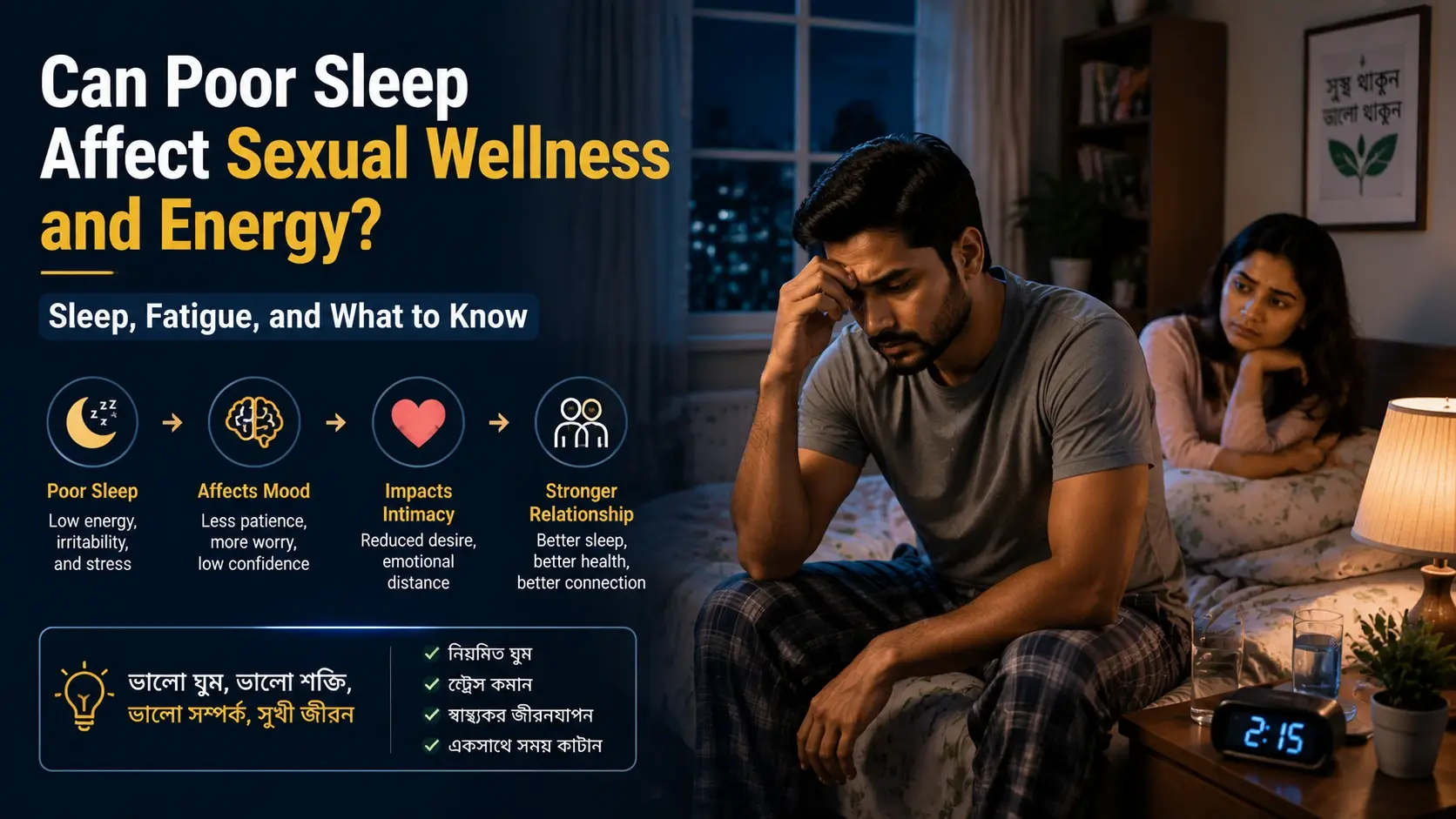
Can Poor Sleep Affect Sexual Wellness and Energy? Sleep, Fatigue, and What to Know
A few nights of poor sleep can change more than your morning mood. You may feel tired, less patient, less confident, or less emotionally present. When that pattern continues, it can also affect how comfortable you feel in your relationship and how connected you feel with your partner.
Poor sleep and low energy do not automatically mean something is seriously wrong. Many people go through tired phases because of work pressure, late nights, family responsibilities, stress, screen use, or irregular routines. But when sleep problems keep repeating, they can slowly affect daily life, emotional balance, and sexual wellness.
This article is for health education and awareness. It is not a diagnosis or treatment plan. The goal is to explain how sleep and energy may connect with sexual wellness, confidence, and relationship comfort — and when it may be better to speak with a qualified healthcare professional.
Quick Answer
Poor sleep may affect sexual wellness by lowering energy, increasing stress, reducing emotional patience, and making it harder to feel relaxed or confident. It is not always the only cause. Ongoing fatigue, sleep problems, low mood, diabetes, heart health concerns, medication effects, or hormonal issues may also need medical review.
Why Sleep Matters Beyond Feeling Tired
Sleep is not only about closing your eyes for a few hours. It supports how your brain works, how your body repairs itself, how you manage emotions, and how much energy you have the next day.
The National Heart, Lung, and Blood Institute explains that ongoing sleep deficiency can affect thinking, reaction time, work, learning, emotional control, and physical health. It may also raise the risk of chronic health problems over time.
That matters because sexual wellness is not separate from the rest of the body. If someone is constantly tired, their interest, patience, confidence, and emotional availability may also change. A person may still care about their partner but feel too drained to feel present.
This is where many people make the wrong assumption. They think the issue is only about desire or relationship problems. Sometimes the body is simply tired for too long, and the mind has not had enough time to recover.
How Poor Sleep May Affect Sexual Wellness
Poor sleep may affect sexual wellness in quiet, indirect ways. It can reduce physical energy. It can increase stress. It can make small worries feel bigger. It can also make a person less patient with themselves and less comfortable in close moments.
For some people, the problem may sound like:
“I feel too tired to connect properly.”
“I care about my partner, but I do not feel mentally present.”
“I feel pressure because I am not feeling like myself.”
These are not unusual concerns. Cleveland Clinic explains that low desire can be affected by physical health, mental health, aging, relationship issues, stress, medications, alcohol, smoking, and activity level. It also notes that people should speak with a healthcare provider if low desire affects wellbeing or a relationship.
So, the message is not “poor sleep causes everything.” That would be lazy and medically weak. The better message is this: poor sleep can be one important part of the bigger picture.
Low Energy Can Change Confidence and Connection
Low energy often affects a relationship before a person knows how to explain it. When someone feels tired most days, even normal conversations may feel like effort. Emotional closeness may feel heavier. A person may avoid intimate moments not because they do not care, but because their body and mind feel drained.
This can create misunderstanding. One partner may think the other is losing interest. The tired person may feel guilty or pressured. If nobody explains the situation calmly, the problem can grow.
A simple sentence can help:
“I have been sleeping badly and feeling low on energy. I do not want you to misunderstand it. I think I need to take my sleep and health more seriously.”
That is clear, respectful, and not overly dramatic. It protects the relationship from unnecessary assumptions.
This issue can affect both men and women. For men, tiredness, stress, and pressure may affect confidence. For women, poor sleep and fatigue may affect mood, comfort, interest, and emotional connection. Do not turn this into a one-gender topic. That would be incomplete.
The Sleep, Stress, and Mood Cycle
Poor sleep and stress often feed each other. A stressful day can make sleep harder. A bad night can make the next day feel more stressful. Over time, this cycle may affect mood, patience, confidence, and communication.
Harvard Sleep Medicine explains that sleep and mood are closely connected. Poor or inadequate sleep can cause irritability and stress, while healthy sleep can support wellbeing. It also notes that anxiety and stress can make sleep harder by keeping the body alert.
This is important because many people blame themselves or their partner too quickly. They think, “Something is wrong with me,” or “My relationship is changing.” Sometimes the real issue is simpler: the body is tired, the mind is overloaded, and sleep has been poor for too long.
That does not mean the concern should be ignored. It means the first step should be careful observation, not panic.
When Poor Sleep May Be Short-Term
Poor sleep may be temporary when it is linked with a clear short-term situation. For example:
- exam or work pressure
- late-night phone use
- travel
- a new job routine
- family stress
- temporary illness
- emotional worry
- one or two unusually busy weeks
In these cases, energy and mood may improve when the routine becomes stable again. But do not use “temporary” as an excuse to ignore repeated sleep problems.
A useful habit is to observe the pattern for a short period. Ask yourself:
- Am I sleeping enough hours?
- Do I wake up feeling rested?
- Do I feel sleepy during the day?
- Is low energy affecting my work or relationship?
- Did this start after stress, illness, a medicine change, or a new routine?
These questions do not diagnose anything. They simply help you understand your pattern and explain it better if you speak with a doctor.
When Low Energy Should Not Be Ignored
Low energy should not be ignored when it continues for weeks, worsens, or starts affecting daily life. Poor sleep can be one reason, but it is not the only possible reason.
Speak with a qualified healthcare professional if:
- sleep problems continue or worsen
- low energy affects work, study, or relationship wellbeing
- you feel tired even after sleeping
- you snore heavily or wake up gasping
- you feel unusually low, anxious, or overwhelmed
- you have diabetes, heart disease, thyroid concerns, hormonal issues, or blood pressure problems
- the issue started after a new medicine or dose change
- there is dizziness, chest discomfort, severe fatigue, or other concerning symptoms
Mayo Clinic notes that adults generally need 7 to 9 hours of good sleep each night and that long-term lack of sleep is linked with higher risk of obesity, diabetes, depression, high blood pressure, stroke, and heart disease.
So, if fatigue becomes your normal state, do not just call it laziness. That is a careless conclusion. Get it checked properly.
Everyday Habits That May Support Better Sleep
Everyday habits cannot replace medical care, but they may support better sleep and overall wellbeing. Keep expectations realistic. These habits may help, but they are not guaranteed cures.
Helpful steps may include:
- keeping a consistent sleep and wake time
- reducing late-night screen use
- avoiding heavy meals very late at night
- limiting caffeine later in the day
- keeping the bedroom calm and dark where possible
- adding light movement during the day
- managing stress before bedtime
- avoiding smoking or alcohol as a sleep solution
- creating a short wind-down routine
- discussing emotional pressure instead of carrying it silently
For many people in Bangladesh, late-night phone use is a real issue. Scrolling social media, watching videos, replying to messages, or working late into the night can quietly reduce sleep quality and leave the person tired the next day.
Better sleep habits may support energy and mood, but ongoing symptoms still need proper evaluation. Do not hide behind “I will fix my routine later” if the problem keeps coming back.
Sleep, Heart Health, and Blood Sugar: Why the Bigger Picture Matters
Poor sleep is not only a lifestyle inconvenience. It may also connect with broader health patterns.
NHLBI explains that good-quality sleep helps repair the heart and blood vessels, supports hormone balance, affects how the body responds to insulin, and supports immune function. Sleep deficiency may result in higher-than-normal blood sugar and may raise the risk of diabetes.
Mayo Clinic also notes that lack of sleep can make heart disease more likely and may affect blood pressure, especially for people who already have high blood pressure. It also advises speaking with a healthcare professional for better sleep guidance, particularly when high blood pressure is involved.
This is why sexual wellness content should not be written like cheap “desire tips.” Sleep, energy, mood, blood sugar, heart health, stress, and relationship comfort can overlap. A serious article should show that connection without making exaggerated claims.
What Not to Assume or Do
Do not assume poor sleep is the only reason for sexual wellness changes. Also, do not assume the worst. Both mistakes are common.
Avoid these:
- Do not self-diagnose from one symptom.
- Do not compare your body or relationship with others.
- Do not rely only on social media advice.
- Do not take random pills or supplements for energy or sexual wellness.
- Do not ignore persistent fatigue.
- Do not blame your partner without understanding your health.
- Do not hide ongoing symptoms because of embarrassment.
- Do not stop prescribed medicine without medical advice.
A common mistake is feeling tired, embarrassed, and then searching for a quick fix. That is not a proper plan. A better plan is to observe the pattern, improve basic sleep habits where possible, and speak with a qualified healthcare professional when symptoms continue.
Talking About Sleep and Intimacy in Bangladesh
In Bangladesh, many people do not openly discuss sexual wellness or relationship comfort. Even married couples may avoid the topic because it feels awkward. That silence can make a sleep-related issue feel more serious than it really is.
A person may be tired, stressed, and sleeping badly — but the partner may think it is rejection. The tired person may then feel guilty, which adds more pressure.
A calm conversation can help:
“I think my sleep and energy have been affecting my mood and closeness. I do not want us to misunderstand each other.”
This is respectful and not too direct. It also keeps the focus on health and communication.
Privacy concerns are understandable, but health should not be ignored because of shyness. If the issue is ongoing, a short and clear explanation to a doctor is enough. You do not need to overexplain everything at once.
Short Summary
Poor sleep and low energy may affect sexual wellness by reducing physical energy, emotional patience, confidence, and relationship comfort. The issue is not always serious, and it is not always caused by sleep alone. Stress, diabetes, heart health, medication effects, hormones, and emotional pressure may also contribute. Better sleep habits may support wellbeing, but persistent symptoms should not be ignored. If sleep problems continue, low energy affects daily life, or symptoms feel sudden or concerning, speak with a qualified healthcare professional.
References used for medical accuracy:
NHLBI, NIH — Sleep Deprivation and Deficiency: How Sleep Affects Your Health
Used for information on sleep deficiency, daytime tiredness, emotional regulation, physical health, hormones, blood sugar, immune function, and heart-health risk.
Cleveland Clinic — Low Libido / Low Sex Drive
Used for general information on low libido, relationship factors, stress, health conditions, medications, and when to speak with a healthcare provider.
Harvard Sleep Medicine — Sleep and Mood
Used for information on the connection between poor sleep, irritability, stress, anxiety, mood, and wellbeing.
Mayo Clinic — Can a Lack of Sleep Cause High Blood Pressure?
Used for information on sleep duration, blood pressure, heart-health risk, stress, metabolism, and when to speak with a healthcare professional about sleep.
Mayo Clinic — Lack of Sleep: Can It Make You Sick?
Used for information on sleep, immune function, chronic health risk, and recommended adult sleep duration.
Final Disclaimer
This article is for educational purposes only and is not a substitute for professional medical advice, diagnosis, or treatment. If you have ongoing, sudden, or concerning symptoms, speak with a qualified healthcare professional.