
Can Stress Affect Sexual Wellness? Libido, Energy, and Relationship Connection
Stress does not always look obvious from the outside. A person may go to work, manage family responsibilities, reply to messages, and still feel mentally overloaded inside. Over time, that pressure can affect sleep, mood, energy, patience, confidence, and relationship connection.
Stress and sexual wellness are closely connected because intimacy is not only physical. It also depends on emotional comfort, energy, trust, relaxation, and how safe a person feels with their partner. When the mind stays busy with worries, deadlines, financial pressure, family tension, or health concerns, sexual wellness may feel different.
This article is for health education and awareness. It is not a diagnosis or treatment plan. The goal is to explain how stress may affect libido, energy, and relationship comfort — and when it may be better to speak with a qualified healthcare professional.
Quick Answer
Stress may affect sexual wellness by lowering energy, changing mood, reducing patience, increasing worry, and making it harder to feel relaxed or emotionally connected. It is not always the only cause. Poor sleep, medication side effects, diabetes, heart health, hormonal changes, and relationship pressure may also contribute. Ongoing or distressing changes should be discussed with a qualified healthcare professional.
How Stress Changes the Body and Mind
Stress is the body’s response to pressure or demand. Short-term stress can sometimes help a person stay alert, but when stress continues for too long, the body may stay in a state of tension. Mayo Clinic explains that stress symptoms can affect the body, mood, and behavior, including fatigue, sleep problems, lack of focus, feeling overwhelmed, and changes in sex drive.
That is why stress can quietly affect sexual wellness. A person may not immediately think, “Stress is the reason.” Instead, they may notice that they feel less interested, less energetic, more irritated, or less emotionally present.
The NHS also explains that stress can affect people physically, mentally, and behaviorally, including signs such as muscle tension, trouble concentrating, constant worry, irritability, sleep changes, and sexual problems.
So the issue is not weakness. It is the body and mind reacting to pressure. The problem starts when stress becomes a repeated pattern and begins affecting daily life, health, or relationship wellbeing.
Why Stress May Affect Libido and Energy
Libido can change for many reasons. Stress is one possible factor, but it is not the only one. NHS guidance on low sex drive lists several possible causes, including relationship problems, stress, anxiety, depression, some medicines, hormonal changes, alcohol use, and long-term conditions such as heart disease, diabetes, thyroid problems, or cancer.
This matters because a person should not blame stress for everything without thinking properly. If libido changes suddenly or continues for a long time, other health factors may need review.
Stress may affect libido and energy in everyday ways. The mind may feel too busy to relax. Tiredness may reduce motivation. Worry may make a person feel emotionally distant. Irritability may create tension with a partner. Poor sleep may lower daily energy. Some people may also start avoiding closeness because it begins to feel like pressure instead of comfort.
None of these automatically mean something is seriously wrong. But they are signs worth noticing, especially when the pattern continues.
Relationship Connection: Stress Can Create Misunderstanding
Stress often affects relationships before people talk about it clearly. One person may become quiet, irritated, tired, or emotionally unavailable. The partner may then assume the problem is lack of love, attraction, or interest.
That misunderstanding can make the pressure worse. The stressed person may feel guilty. The partner may feel rejected. Then both people become more guarded.
A better approach is to explain the situation early, calmly, and without blame:
“I have been under a lot of stress lately, and I think it is affecting my energy and mood. I do not want you to misunderstand it.”
This type of sentence keeps the conversation respectful. It does not overexplain. It also helps separate the stress issue from the relationship itself.
Cleveland Clinic explains that when healthcare providers assess low libido, they may ask about symptoms, health history, medicines, relationships, stress level, and thoughts or feelings about sex. That shows libido is not only a physical issue; emotional and relationship factors can matter too.
Stress, Sleep, and Low Energy Often Work Together
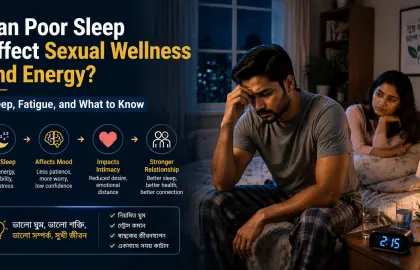
Stress and poor sleep often feed each other. Stress can make it harder to fall asleep or stay asleep. Poor sleep can then make the next day feel more stressful. Over time, this cycle may affect energy, confidence, patience, and relationship comfort.
Mayo Clinic lists sleep problems, fatigue, lack of motivation, memory problems, and changes in sex drive among common effects of stress. It also suggests healthy steps such as physical activity, relaxation techniques, social connection, enough sleep, balanced eating, and avoiding tobacco, excess alcohol, and illegal substances.
For many people in Bangladesh, stress also mixes with late-night screen use, work pressure, family responsibilities, financial worry, and lack of proper rest. A person may think they are “just tired,” but the tiredness may actually be part of a bigger stress pattern.
The first step is not to panic or blame yourself. It is to notice the pattern calmly. Ask yourself:
- Am I sleeping properly?
- Am I feeling mentally overloaded most days?
- Am I becoming irritated more easily?
- Is stress affecting my relationship communication?
- Did this start after a life change, work pressure, illness, or medicine change?
These questions do not diagnose anything. They simply help you understand the pattern more clearly.
When Stress Becomes More Than a Temporary Phase
Short-term stress is common. A busy week, exam pressure, travel, financial planning, or family responsibility may temporarily affect mood and energy. In many cases, things improve when the stressful period passes.
But stress deserves more attention when it becomes your normal state.
Mayo Clinic explains that when stressors are always present, the stress response may stay activated, and long-term exposure to stress hormones can disrupt many body processes. Chronic stress may raise the risk of problems such as anxiety, depression, digestive issues, headaches, muscle tension, heart disease, high blood pressure, stroke, sleep problems, weight gain, and memory or focus problems.
That does not mean every stressed person will develop these conditions. Do not turn this into fear-based content. The point is simpler: ongoing stress is not something to ignore.
If stress is repeatedly affecting your energy, mood, health, or relationship comfort, it is worth taking seriously.
What May Help When Stress Affects Connection
Stress support should be realistic. A few healthy habits may support wellbeing, but they are not magic cures. The goal is to reduce pressure, improve daily rhythm, and create room for rest and communication.
Helpful steps may include:
- Keeping a regular sleep routine
- Taking short walks or doing light physical activity
- Reducing late-night screen scrolling
- Taking small breaks during busy days
- Writing down worries instead of carrying everything mentally
- Eating balanced meals where possible
- Reducing smoking or alcohol use
- Speaking calmly with a partner
- Making time for non-pressured emotional connection
- Asking for support when stress feels too heavy
Cleveland Clinic includes stress management, education, communication, and self-care routines as possible parts of managing low libido depending on the cause.
The important phrase is depending on the cause. Stress management can help, but it should not be presented as a guaranteed fix for sexual wellness. If the issue is linked with medication, diabetes, heart health, hormones, depression, anxiety, or relationship conflict, professional guidance may be needed.
When It Is Better to Get Professional Advice
Speak with a qualified healthcare professional if stress, low libido, low energy, or relationship discomfort continues, worsens, or causes distress.
It is especially important to seek advice if:
- stress feels hard to control
- low energy affects work, study, or daily life
- libido changes suddenly or continues for weeks
- sleep problems keep repeating
- anxiety, low mood, or overwhelm becomes frequent
- relationship pressure becomes difficult to manage
- symptoms are linked with diabetes, heart disease, hormonal issues, medication, or blood pressure problems
- there is chest discomfort, dizziness, severe fatigue, or other concerning physical symptoms
NHS guidance says people should see a GP if they are worried about low sex drive or think medicine or hormonal contraception may be affecting it. It also notes that treatment depends on the cause.
Mayo Clinic advises seeing a healthcare provider if stress symptoms continue despite efforts to manage stress, or if the person is unsure whether stress is the cause.
That is the serious point: do not keep guessing forever. If the issue is ongoing, get proper advice.
What Not to Assume or Do
Stress is common, but that does not mean every sexual wellness concern is “just stress.” That assumption can delay proper help.
Avoid these mistakes:
- Do not self-diagnose from one symptom.
- Do not blame your partner immediately.
- Do not assume low libido means the relationship is failing.
- Do not ignore repeated sleep problems or low energy.
- Do not take random pills or supplements based on online claims.
- Do not stop prescribed medicine without medical advice.
- Do not compare your relationship with other people.
- Do not rely only on social media advice.
A common mistake is hiding the concern because it feels private. That only makes the pressure heavier. A better approach is to notice the pattern, reduce stress where possible, communicate respectfully, and speak with a qualified professional when the concern continues.
Talking About Stress and Intimacy in Bangladesh
In Bangladesh, many people feel shy discussing sexual wellness, even in marriage. Stress-related changes can therefore become harder to explain. One person may feel tired or emotionally overloaded, while the other person may think it is rejection.
A calm explanation can prevent unnecessary misunderstanding:
“I think stress has been affecting my mood and energy. I care about our relationship, but I need to handle this properly.”
This is respectful, private, and not too direct. It keeps the focus on health, not blame.
Privacy concerns are understandable. But health issues should not be ignored because of embarrassment. If stress, low energy, or libido changes continue, speaking privately with a qualified doctor or mental health professional can be a responsible step.
How Stress Connects With Other Health Factors
Stress and sexual wellness should not be treated as an isolated topic. Stress also connects with other health factors, so it is useful to look at the bigger picture.
Stress often overlaps with poor sleep and low energy. A person who sleeps badly may feel more stressed, and a stressed person may sleep badly.
Stress also connects with heart health. Long-term stress may affect blood pressure and overall cardiovascular health. Mayo Clinic notes that chronic stress is associated with higher risk of heart disease, high blood pressure, and stroke.
Stress may also overlap with diabetes and blood sugar concerns, because chronic stress, poor sleep, weight changes, and lifestyle habits can affect overall metabolic health.
Medication side effects should also be considered. If libido, mood, or energy changes started after a new medicine or dose change, the safer step is to speak with a doctor or pharmacist instead of changing medicine alone.
The Psychological section is also relevant because stress, anxiety, low mood, overthinking, and confidence concerns often sit close together. For couples, stress can affect communication, patience, and emotional closeness.
Short Summary
Stress may affect sexual wellness by changing libido, lowering energy, increasing worry, affecting sleep, and creating distance in relationship communication. It is not always the only cause. Poor sleep, medication side effects, diabetes, heart health, hormones, anxiety, low mood, and relationship pressure may also contribute. Short-term stress may improve when life becomes stable again, but ongoing stress should not be ignored. If changes continue, worsen, or cause distress, speak with a qualified healthcare professional for safe guidance.
References used for medical accuracy:
Mayo Clinic — Stress Symptoms: Effects on Your Body and Behavior
Used for information on how stress may affect the body, mood, behavior, fatigue, sleep, focus, and changes in sex drive.
Mayo Clinic — Chronic Stress Puts Your Health at Risk
Used for information on long-term stress response, cortisol exposure, sleep problems, heart health, high blood pressure, mood, and physical health risks.
NHS — Low Sex Drive / Loss of Libido
Used for information on possible causes of low libido, including stress, anxiety, depression, relationship problems, medication, hormonal changes, and long-term conditions.
NHS — Get Help With Stress
Used for information on stress symptoms, including physical, mental, behavioral, sleep-related, and sexual wellness-related symptoms.
Cleveland Clinic — Low Libido / Low Sex Drive
Used for information on how stress, relationship factors, health history, medications, and communication may be considered when assessing low libido.
Final Disclaimer
This article is for educational purposes only and is not a substitute for professional medical advice, diagnosis, or treatment. If you have ongoing, sudden, or concerning symptoms, speak with a qualified healthcare professional.