Why Partners Experience the Same Relationship Differently
Partners can experience the same relationship differently because each person notices, feels, and interprets moments through their own expectations, responsibilities, emotional needs, past experiences, and daily pressures. One person may see stability, while the other feels distance. One may think silence means peace, while the other feels ignored. The same moment can carry different meanings.
When Two People Live the Same Moment Differently
Two people can be in the same home, share the same routine, and still experience the relationship in very different ways.
One person may think, “We are fine. Nothing serious is wrong.”
The other may think, “We are slowly becoming distant.”
This difference can feel confusing. It may even feel unfair. One person may feel accused. The other may feel unseen.
But relationship experiences are not only shaped by events. They are shaped by what each person feels those events mean.
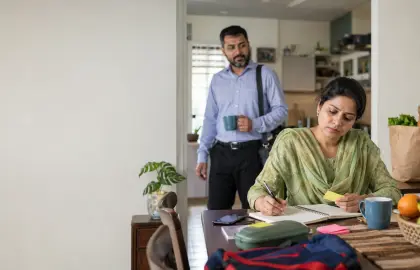
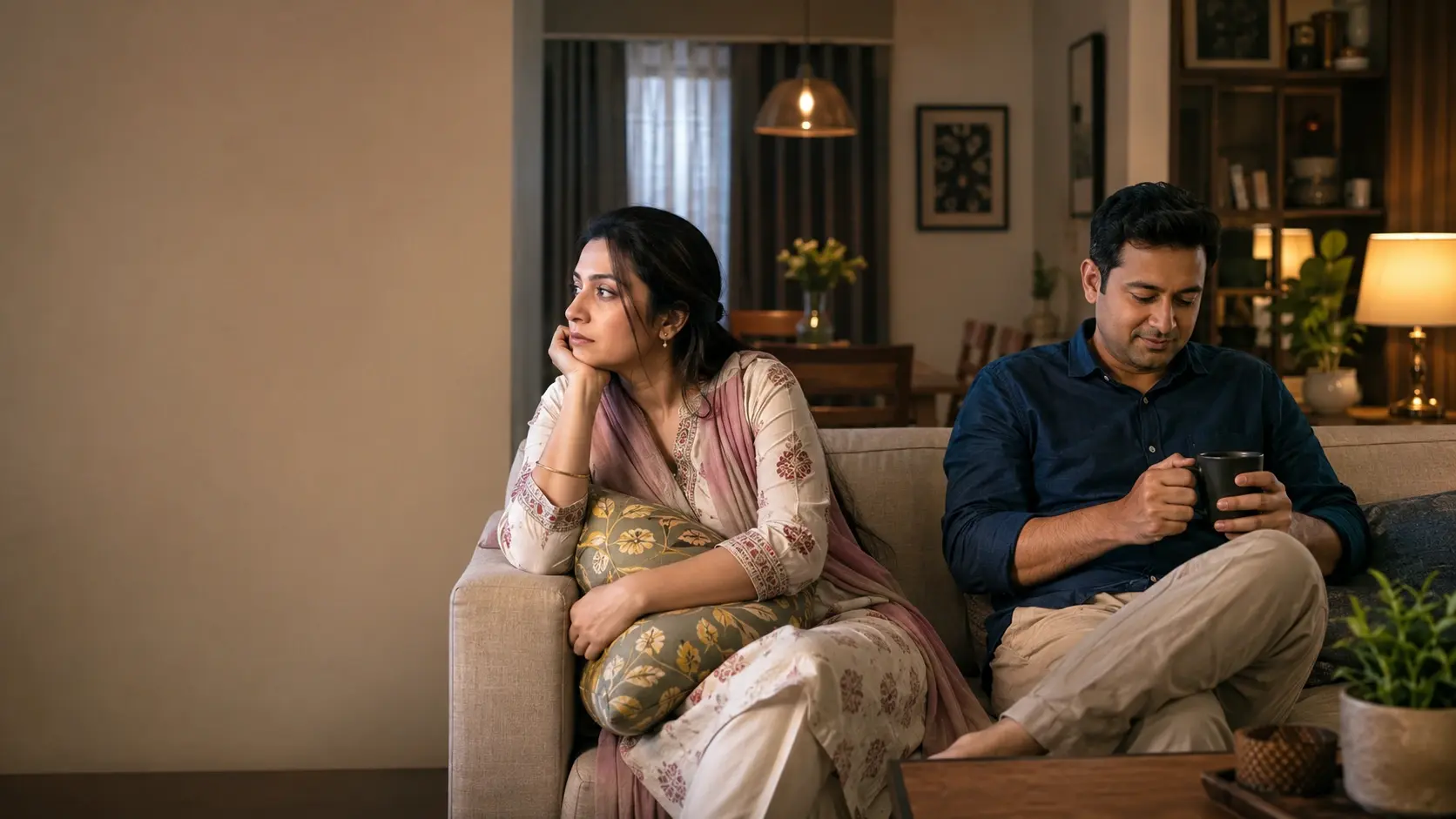
For example, silence after dinner may feel peaceful to one person. To another, it may feel like emotional distance. A busy work schedule may feel responsible to one person. To another, it may feel like being left alone with everything.
The problem is not always that one person is lying or overreacting.
Often, both people are noticing different parts of the same reality.
The Same Event Can Carry Different Emotional Meaning
A small moment can feel very different depending on what someone expected, needed, or feared.
A partner who asks, “Why didn’t you call?” may not only be asking about a phone call. They may be asking, “Did you think about me?”
The other person may hear it differently. They may hear, “You are blaming me again.”
Now the same sentence creates two separate experiences.
One person feels neglected. The other feels criticized.
This is how misunderstanding begins.
In many Bangladeshi relationships, people are not always used to naming emotional needs directly. Instead of saying, “I wanted to feel remembered,” someone may complain about the missed call. Instead of saying, “I feel judged,” the other may become defensive.
Both may be reacting to the emotional meaning behind the moment, not only the moment itself.
That is why arguments often repeat. The surface issue changes, but the emotional meaning remains unresolved.
Why One Partner Feels Unseen While the Other Feels Responsible
One common relationship gap appears around responsibility.
One person may feel they are doing enough because they are working hard, managing money, helping family, or staying loyal. They may believe responsibility itself is a form of care.
The other person may still feel emotionally unseen.
They may think, “You provide, but you do not notice how I feel.”
This can happen in any direction. It is not about blaming men or women. It is about how people define care differently.
In Bangladesh, relationship roles are often shaped by family expectations. One person may focus on financial stability. Another may focus on emotional presence, household effort, parenting, or daily attention.
Both may be contributing.
But if they value different forms of effort, they may fail to recognize each other properly.
A person managing household work may feel their effort is invisible. A person handling outside pressure may feel their sacrifice is ignored. A person caring for children or aging parents may feel emotionally exhausted. Another may think, “But I am also trying.”
The relationship then becomes full of effort, but low in appreciation.
That is a painful combination.
What Each Person Notices May Be Different
People notice different things in a relationship.
One may notice tasks.
Another may notice tone.
One may notice financial responsibility.
Another may notice emotional availability.
One may notice that there was no fight today.
Another may notice that there was no warmth either.
This is why two people may honestly describe the same relationship differently.
| Same situation | One person may experience it as | The other may experience it as |
|---|---|---|
| Quiet evening at home | Peace after a long day | Emotional distance |
| Working long hours | Responsibility and sacrifice | Lack of attention |
| Asking many questions | Care and concern | Control or criticism |
| Avoiding conflict | Keeping peace | Refusing to discuss problems |
| Handling family duties | Normal responsibility | Invisible workload |
| Giving advice quickly | Trying to help | Not listening properly |
| Spending time on phone | Relaxing after stress | Being ignored |
Neither side automatically proves the whole truth.
The truth may be hidden between both experiences.
A healthier conversation begins when both people ask, “What did this moment feel like to you?”
The Common Mistake: Thinking One Version Is the Only Truth
A major mistake is treating one experience as the only correct version.
One person may say, “You are too sensitive.”
The other may say, “You never care.”
Both statements can close the conversation.
When one partner dismisses the other’s experience, the issue becomes bigger than the original moment. Now the person is not only upset about what happened. They are upset because their feeling was rejected.
At the same time, feeling hurt does not always mean the other person intended harm.
This is where maturity matters.
A person can say, “That hurt me,” without saying, “You are a bad partner.”
Another can say, “I did not mean it that way,” without saying, “So your feeling is wrong.”
Both parts matter.
Intention and impact are not the same.
A person may not intend to hurt their partner, but the impact may still need attention. A person may feel hurt, but they may still need to understand the other side before judging the whole relationship.
How Family Pressure Can Shape Different Experiences
In Bangladesh, relationships often happen inside a larger family and social setting.
That can make partner experiences even more different.
A couple living with extended family may not have enough private time to talk calmly. One person may feel protected by family involvement. The other may feel watched or unable to speak freely.
Relatives’ comments may feel normal to one person and hurtful to the other.
Financial pressure may feel like a shared challenge to one person, but like emotional abandonment to another.
One partner may avoid difficult conversations because they do not want problems to become visible to the wider family. The other may experience that silence as avoidance.
These differences are not always obvious.
From outside, the relationship may look stable. Inside, one person may be carrying unspoken discomfort.
This is why private honesty matters. Not public performance. Not pretending everything is fine. Not involving others too quickly.
A relationship needs some space where both people can speak without fear of being exposed, mocked, or misunderstood.
How to Understand Different Experiences Without Blame
The goal is not to decide who is more correct.
The goal is to understand what each person is carrying.
A useful conversation may begin with softer questions:
• “What did that moment feel like for you?”
• “What did you think I meant?”
• “What were you needing from me then?”
• “Did I miss something important to you?”
• “What do you think I was trying to do?”
• “How can we handle this better next time?”
These questions are simple, but not always easy.
They require both people to pause before defending themselves.
A person may also need to explain their experience clearly. Instead of saying, “You never care,” they might say, “When you stay silent after a hard day, I start feeling alone.”
Instead of saying, “You complain too much,” the other might say, “When I hear this after work, I feel like my effort is not being seen.”
This does not solve every problem immediately.
But it changes the tone from attack to understanding.
When Different Experiences Become a Serious Problem
Different experiences are normal in relationships.
But they become harmful when one person is always dismissed, mocked, controlled, silenced, or blamed.
If every concern is called overthinking, the person may stop speaking. If every disagreement becomes a fight, both may become guarded. If one person uses fear, threats, isolation, or control, that should not be treated as normal relationship difficulty.
Understanding both sides does not mean tolerating harmful behavior.
Both people deserve to feel safe, respected, and taken seriously.
Professional or trusted support may be important when the same conflict keeps repeating, when fear is present, or when conversations cause more harm than clarity.
Relationship awareness should not become an excuse for accepting emotional pain silently.
The Healthiest Relationships Make Room for Two Realities
Partners can experience the same relationship differently because they are not the same person.
They carry different histories, expectations, responsibilities, fears, and emotional needs.
The strongest relationships are not built by forcing one version of reality to win. They are built when both people become willing to understand what the other person is living through.
Sometimes love is not only asking, “What happened?”
It is asking, “What did that feel like for you?”
That question can open a door that blame keeps closed.
Key Takeaways
• Partners can experience the same relationship differently because they attach different meanings to the same moments.
• One person may see responsibility, while another may feel emotionally unseen.
• Silence, workload, family pressure, and daily habits can feel different to each partner.
• Different experiences do not automatically mean one person is wrong.
• Understanding impact and intention can reduce repeated misunderstanding.
• Repeated fear, control, coercion, or emotional harm should be taken seriously.
When to Seek Professional Help
Consider professional support if different relationship experiences lead to repeated arguments, emotional withdrawal, fear, control, coercion, distress, or difficulty managing daily life.
Support may also help if one person always feels dismissed, blamed, unsafe, or unable to speak honestly. A trusted support person or qualified professional can help create safer space for understanding.
Seeking help does not mean the relationship has failed. It means the concern deserves careful attention.
Safety Note
This article is for general education only and is not a substitute for medical, psychological, or relationship counselling. If you are experiencing ongoing distress, pain, pressure, fear, abuse, trauma, coercion, unsafe behavior, serious relationship conflict, or concerns affecting your daily wellbeing, consider speaking with a qualified professional or trusted support person.