How Can Depression and Emotional Strain Affect Desire and Connection?
Low desire can feel confusing, especially when it appears during a period of depression, emotional strain, stress, or relationship pressure. A person may care about their partner but still feel emotionally tired, disconnected, or unable to respond the way they used to. That does not automatically mean the relationship has failed. It also does not mean the concern is “only in the mind.”
Depression and low desire can be connected, but the relationship is not always simple. Mood, sleep, energy, physical health, medication, hormones, pain, stress, and emotional safety may all play a role. In Bangladesh, many adults may avoid discussing these concerns because of privacy, embarrassment, fear of judgment, or marriage expectations.
This article explains how depression and emotional strain may affect desire, what else can overlap, what not to assume, and when speaking with a qualified professional may be important. It is written for adult health education and psychological wellbeing awareness, not diagnosis, treatment, or counselling.
Quick Answer
Depression and emotional strain can affect low desire by reducing energy, interest, emotional connection, and comfort with closeness. But low desire is rarely caused by one factor alone. Stress, sleep problems, relationship pressure, physical health, hormones, pain, and medication can also overlap. Sudden, ongoing, or distressing changes should be discussed with a qualified professional.
Can Depression Affect Low Desire?
Yes, depression can affect desire in some adults, but it should not be treated as the only possible cause.
Depression may affect how a person feels, thinks, sleeps, eats, works, communicates, and connects with others. It can involve low mood, loss of interest, low energy, poor concentration, irritability, sleep changes, and difficulty enjoying things that once felt meaningful.
That loss of interest may affect many parts of life, including relationship closeness. A person may feel emotionally heavy, tired, distracted, irritable, or disconnected. They may not have the same energy for conversation, affection, or intimacy that they once had.
This does not mean low desire proves depression. It also does not mean depression always causes low desire. The more accurate view is that depression can be one possible factor among several.
Desire is connected with emotional wellbeing, physical health, relationship comfort, and daily life pressure. That is why it should be understood carefully instead of being reduced to one simple explanation.
Why Emotional Strain Can Reduce Interest and Energy
Emotional strain is not always the same as clinical depression. A person may feel overloaded because of work pressure, financial worries, family responsibilities, parenting stress, grief, conflict, poor sleep, or long-term uncertainty.
When the mind is overloaded, desire may not reduce because the person stopped caring. It may reduce because the person feels exhausted, mentally crowded, or emotionally unavailable.
Some people may feel:
- physically present but emotionally distant
- more interested in rest than closeness
- guilty because they cannot respond like before
- worried that their partner will misunderstand
- afraid that one conversation will turn into conflict
- unsure whether the issue is emotional, physical, or relationship-related
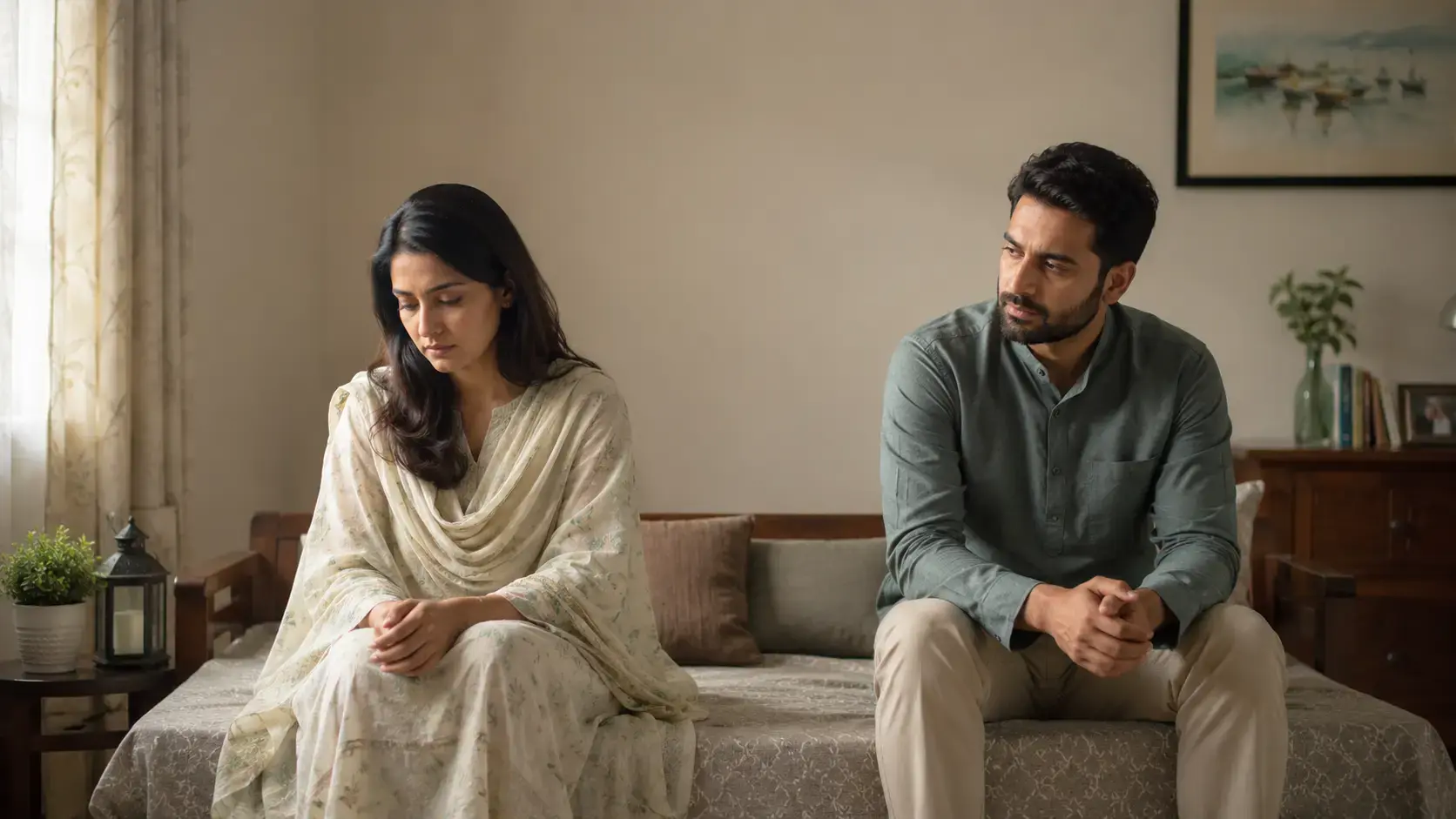
That kind of strain can affect relationship comfort. If one partner feels emotionally drained and the other feels rejected, both may suffer silently.
This is why low desire should not be handled with blame. The question should not be, “Who is at fault?” A better question is, “What is affecting emotional energy, comfort, and wellbeing right now?”
Low Desire Does Not Always Mean Lack of Love
One of the most damaging assumptions is that low desire always means lack of love, lack of attraction, or relationship failure. That is too simple, and it can create unnecessary pain.
A person may love their partner and still experience low desire. They may feel emotionally strained, depressed, tired, unwell, anxious, pressured, or disconnected from themselves. They may also fear that if they explain honestly, their partner will feel hurt or angry.
For the partner, low desire can feel personal. They may wonder, “Am I no longer wanted?” or “Did I do something wrong?” Those feelings are understandable, but jumping to conclusions can make the situation worse.
Desire is influenced by emotional, physical, relational, and lifestyle factors. It is not only about attraction. Emotional safety, rest, trust, health, stress level, and communication all matter.
A calm approach is better than pressure. Pressure may make the person feel watched, guilty, or responsible for fixing the relationship alone. That can deepen emotional distance instead of helping.
Stress, Sleep, Health, and Medication Can Overlap
Low desire should not be explained only through depression or emotions. Physical and medical factors can overlap.
Possible overlapping factors may include:
- poor sleep
- ongoing fatigue
- chronic stress
- anxiety
- pain or discomfort
- hormonal changes
- diabetes
- heart health concerns
- high blood pressure
- long-term illness
- childbirth or postpartum changes
- menopause
- certain prescribed medicines
- relationship conflict
- emotional distress
Some health conditions and prescription medicines may affect desire, comfort, or emotional response. Depression medicines, especially some medicines that affect serotonin, can also be linked with sexual side effects in some people.
This does not mean someone should stop medication. That would be careless and risky. Medication decisions should always be discussed with a qualified healthcare professional.
The practical point is simple: do not self-diagnose. Low desire may be emotional, medical, relational, medication-related, or mixed.
Depression Medication and Low Desire: What to Know Safely
This part needs careful handling. Some people notice desire changes after starting or changing medication. Others may experience low desire because of depression itself, before any medicine is involved. Sometimes both can overlap.
Do not stop, reduce, or change prescribed medicine on your own.
A safer approach is to note the pattern clearly:
- When did the change begin?
- Did it start before or after a medication change?
- Are there mood, sleep, fatigue, or pain changes too?
- Is the concern sudden, gradual, or situation-specific?
- Is it causing distress or relationship conflict?
Then discuss it privately with a qualified healthcare professional. A doctor can review whether depression, another health condition, medication, sleep, stress, hormones, or relationship pressure may be involved.
The goal is not to blame the medicine or ignore it. The goal is to handle the concern safely.
Bangladesh Context: Privacy, Marriage Pressure, and Silence
In Bangladesh, low desire and mental health are both sensitive topics. Many adults do not feel comfortable saying, “I feel emotionally low,” or “I do not feel desire like before.” Even married couples may avoid these conversations because of privacy concerns, fear of judgment, religious or moral hesitation, family pressure, or not knowing how to explain the issue.
This silence can create misunderstanding.
One person may feel emotionally drained. The other may feel rejected. Both may stay quiet. Over time, silence can become distance.
Marriage expectations may also add pressure. Some people feel they must act normal even when they are depressed, exhausted, unwell, or emotionally strained. That pressure can make desire feel like a responsibility instead of something connected to comfort and emotional safety.
Bangladesh readers should not be made to feel backward for being private. Privacy is valid. But private does not mean unsupported. If low desire is distressing, ongoing, sudden, or linked with mood or health changes, speaking to a qualified doctor, mental health professional, or counsellor can be a responsible step.
How Partners Can Respond Without Pressure
A partner’s response can either reduce pressure or increase it.
Blame usually makes the situation worse. Comments like “You do not care anymore,” “You changed,” or “Something is wrong with you” may make the person feel defensive, ashamed, or emotionally unsafe.
A better approach is calm curiosity. For example:
“I feel we have both been distant lately. Is stress or anything else affecting you?”
This is not therapy advice. It is simply a more respectful way to begin a sensitive conversation.
Helpful partner behaviour may include:
- avoiding pressure or guilt
- not comparing the relationship with others
- choosing a calm time to talk
- asking about stress, health, and emotional comfort
- listening without trying to win the argument
- not turning one conversation into a judgment
- respecting privacy
- encouraging professional help when needed
The person experiencing low desire should also not be forced to explain everything immediately. Emotional strain can make words difficult. Patience matters.
What Not to Do
Do not assume low desire means lack of love. Desire can change because of depression, stress, health, sleep, medication, emotional strain, or relationship pressure.
Do not blame yourself immediately. Low desire is not a moral failure.
Do not blame your partner automatically. A partner may be struggling with something they cannot explain clearly yet.
Do not assume the issue is only psychological. Physical health, hormones, pain, fatigue, and medication can also contribute.
Do not stop prescribed medicine without medical advice. Speak with a qualified healthcare professional if medication may be involved.
Do not take random pills, supplements, or online “quick fixes” based on social media claims.
Do not pressure, shame, guilt, compare, or force closeness. That can harm emotional safety.
Do not ignore sudden or persistent symptoms, especially if they come with pain, severe fatigue, dizziness, major mood changes, panic-like feelings, or distress.
Do not treat silence as proof that the relationship has failed. Silence may mean fear, shame, confusion, exhaustion, or not knowing how to talk.
When to Seek Professional Help
Professional support may be helpful when low desire is sudden, persistent, distressing, or affecting relationship wellbeing.
Consider speaking with a qualified healthcare professional, mental health professional, psychologist, psychiatrist, pharmacist, or relationship counsellor if:
- low mood continues or worsens
- desire changes are sudden or ongoing
- emotional strain affects daily life
- fatigue, sleep problems, pain, or dizziness are present
- anxiety, low mood, or distress affects work or family life
- the concern creates repeated relationship conflict
- medication may be involved
- symptoms are linked with diabetes, heart disease, hormonal issues, childbirth, menopause, long-term illness, or chronic stress
- either partner feels pressured, controlled, humiliated, unsafe, or emotionally harmed
If someone feels unable to stay safe, or there is immediate safety risk, seek urgent help from qualified local emergency, healthcare, or mental health support.
Seeking help is not weakness. It is sensible when emotional, physical, or relationship concerns are affecting wellbeing.
Short Summary
Depression, emotional strain, and low desire can be connected, but the relationship is not always simple. Depression may affect interest, energy, emotional connection, and comfort. Emotional strain from work, family pressure, financial stress, poor sleep, or relationship conflict may also reduce desire. At the same time, physical health, hormones, medication, pain, fatigue, and lifestyle factors can overlap.
Low desire does not automatically mean lack of love or relationship failure. It should not be handled with blame, shame, pressure, or random online fixes. In Bangladesh, privacy concerns and cultural silence can make the topic harder to discuss, but ongoing distress should not be ignored. If the change is sudden, persistent, emotionally difficult, or linked with health symptoms or medication, speak with a qualified professional.
References
World Health Organization — Sexual Health
Supports the broad framing that sexual health is connected with physical, emotional, mental, and social wellbeing.
World Health Organization — Depression
Link: https://www.who.int/health-topics/depression
Supports the explanation that depression is a mental health condition linked with low mood or loss of pleasure or interest.
NHS — Depression in Adults: Symptoms
Link: https://www.nhs.uk/mental-health/conditions/depression-in-adults/symptoms/
Supports the explanation that depression symptoms may include low mood, loss of interest, low motivation, anxiety, and difficulty enjoying life.
Mayo Clinic — Low Sex Drive in Women: Symptoms and Causes
Link: https://www.mayoclinic.org/diseases-conditions/low-sex-drive-in-women/symptoms-causes/syc-20374554
Supports the reminder that illnesses, physical changes, and medicines may affect low desire, including some depression medicines.
Mayo Clinic — Antidepressants and Sexual Side Effects
Supports the medication safety reminder that antidepressants can have sexual side effects and should be discussed with a healthcare professional rather than changed without advice.
Mayo Clinic — Female Sexual Dysfunction: Symptoms and Causes
Supports the explanation that medical conditions, certain medicines, hormonal changes, emotional concerns, stress, anxiety, depression, and relationship issues can contribute to sexual wellness concerns.
Cleveland Clinic — Sexual Dysfunction: Disorders, Causes, Types & Treatment
Link: https://my.clevelandclinic.org/health/diseases/9121-sexual-dysfunction
Supports the explanation that stress, health conditions, medication, emotions, anxiety, depression, relationship problems, and poor body image can overlap with sexual wellness concerns.
Final Disclaimer
This article is for educational purposes only and is not a substitute for professional medical advice, diagnosis, treatment, mental health support, therapy, or relationship counselling. If you have ongoing, sudden, distressing, or concerning symptoms, or if emotional or relationship concerns are affecting your wellbeing, speak with a qualified healthcare professional, mental health professional, or relationship counsellor.