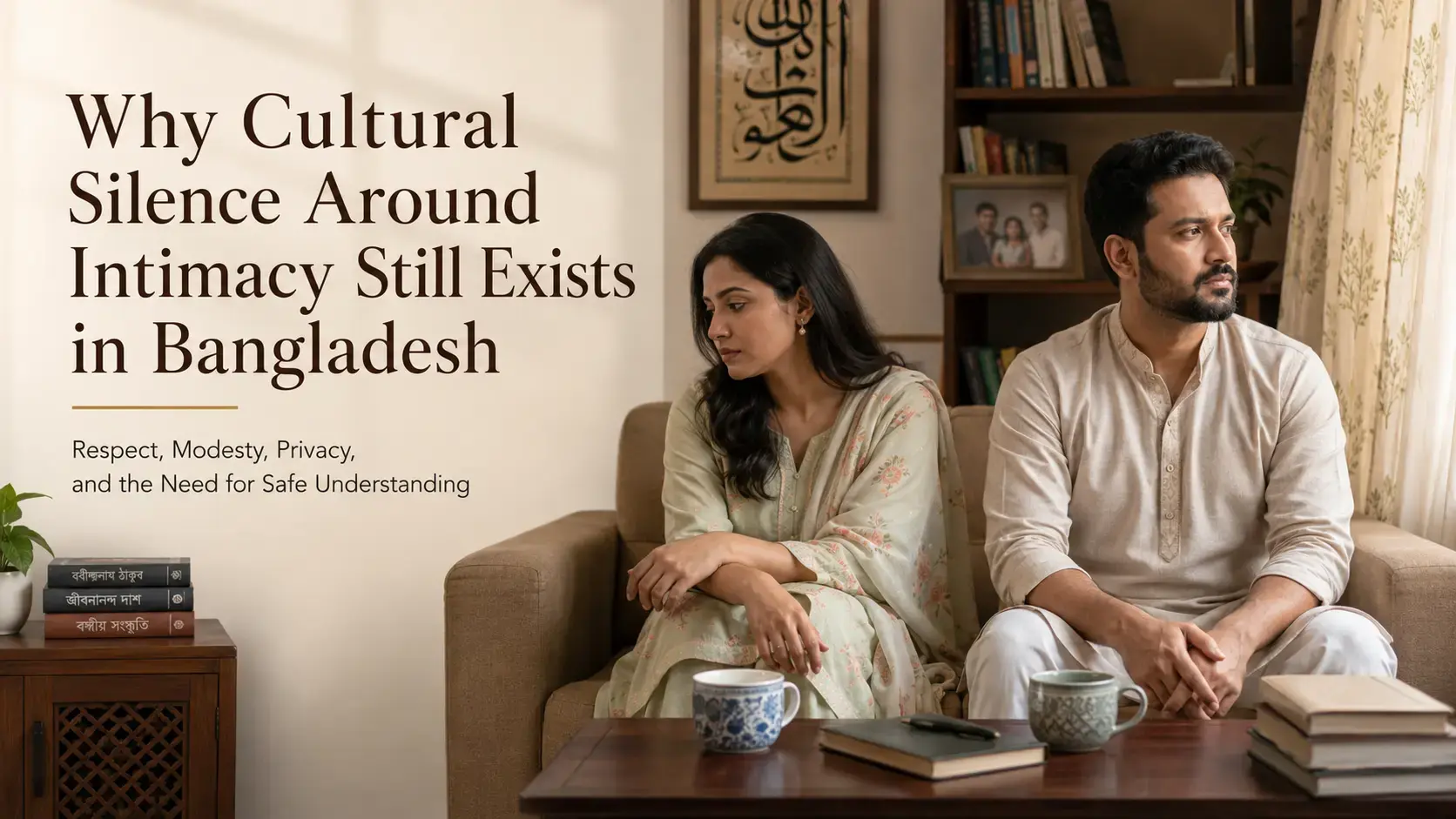
Why Cultural Silence Around Intimacy Still Exists in Bangladesh
In Bangladesh, many people grow up with strong values around modesty, privacy, family respect, religious beliefs, and marriage. These values can offer dignity and direction. But they can also make sensitive conversations difficult, especially when people do not have safe language to discuss emotional closeness, relationship comfort, personal boundaries, and responsible wellbeing.
This silence is not always caused by lack of care. Often, it comes from shyness, fear of judgment, family expectations, or the belief that private topics should never be discussed. The challenge is to protect dignity without leaving people confused, unsupported, or misinformed.
```
What This Means
Cultural silence often exists because people want to protect modesty, family honour, religious values, and privacy. In many families, sensitive topics are avoided because they feel uncomfortable, embarrassing, or too private for open discussion.
But silence is not always the same as respect. When people cannot ask safe questions, they may carry confusion alone or turn to unreliable sources. Respectful education gives people a cleaner, calmer way to understand sensitive matters without disrespecting culture, faith, or family values.
Silence Often Comes From Protection, Not Cruelty
It is easy to say, “People should talk more openly.” But that statement alone is too shallow.
In many Bangladeshi homes, silence around private relationship matters comes from a desire to protect dignity. Parents may believe that avoiding certain topics keeps children modest. Elders may think that private issues should stay hidden to avoid gossip. Couples may avoid difficult conversations because they do not want to create conflict or disrespect each other.
These intentions may come from care. The problem begins when protection becomes complete avoidance.
A person may grow up without knowing how to discuss emotional comfort, personal boundaries, marriage expectations, or relationship concerns. Later, when they face real questions, they may feel ashamed for even thinking about them.
That is not healthy protection. That is emotional confusion wearing the clothes of silence.
Modesty Should Not Mean No Awareness
Modesty is important to many people in Bangladesh. It may be connected to faith, family upbringing, personal comfort, or social values. When understood well, modesty can protect dignity and help people handle private matters carefully.
But modesty should not remove awareness.
A person can learn about relationship wellbeing without using explicit language. A couple can discuss emotional distance without making the conversation vulgar. A young adult can understand personal boundaries without disrespecting family values.
The tone matters. The purpose matters. The setting matters.
Respectful education does not make people shameless. It can help them become more thoughtful, careful, and responsible.
The real issue is not whether people should discuss sensitive matters loudly. They should not. The better question is whether people have access to safe, private, and respectful guidance when they need it.
Privacy Is Valuable, But Isolation Is Not
Privacy protects personal dignity. Not everything belongs in public conversation. Not every concern should be shared with friends, relatives, social media, or casual groups.
But privacy becomes harmful when it turns into isolation.
Some people do not speak because they are private. Others do not speak because they are afraid. These are not the same.
Healthy privacy feels calm and chosen. Fear-based silence feels heavy and lonely. A person may think, “I cannot ask anyone,” “People will judge me,” or “Maybe I am wrong for feeling this way.”
That kind of silence can affect personal wellbeing. It may create stress, misunderstanding, emotional distance, or poor decision-making.
The goal is not to remove privacy. The goal is to make sure privacy does not block support.
Family Expectations Can Make Conversations Difficult
In Bangladesh, family plays a strong role in personal life. This can be a source of comfort, guidance, and protection. Families often support marriage decisions, life planning, religious practice, and social behaviour.
But strong family involvement can also make sensitive topics difficult to discuss.
A person may worry about disappointing parents. A married couple may fear that sharing a private concern will bring too many opinions. A young adult may avoid asking questions because they do not want to look disrespectful.
Sometimes people remain silent not because the topic is wrong, but because the social cost feels too high.
This is why respectful language is important. People need a way to talk about emotional comfort, privacy, boundaries, and relationship understanding without sounding careless or rebellious.
A calm sentence can open the door:
“I want to understand this responsibly.”
“I feel confused and need safe guidance.”
“I want to respect our values, but I also need clarity.”
“I do not want public discussion; I just need proper understanding.”
This kind of language protects dignity while allowing support.
Religious Values Shape the Way People Learn
For many Bangladeshi readers, religious values influence how they understand modesty, marriage, responsibility, and personal conduct. These values should not be mocked or treated as obstacles.
Religious belief can give people discipline, meaning, emotional grounding, and a strong sense of right and wrong. Many people want to make choices that align with their faith and family values.
The difficulty comes when people confuse respectful learning with disrespect.
A person may think that asking a question means they are becoming careless. But sincere learning does not have to go against belief systems. It depends on the source, purpose, and tone.
Learning from vulgar or careless content can create discomfort. Learning from respectful, non-explicit, balanced guidance can help people understand themselves and their responsibilities better.
Faith and awareness do not need to fight each other. Poor communication is usually the real problem.
Silence Can Push People Toward Unsafe Information
When people cannot ask safe questions at home, school, community spaces, or within relationships, they may search online. That is where the problem becomes serious.
Online content is not always responsible. Some content is too explicit. Some is fear-based. Some is judgmental. Some is written for a different culture and does not fit Bangladeshi reality. Some content may make people feel more confused instead of more informed.
This is why education-first platforms matter.
Readers need clear language that respects modesty, privacy, marriage, family values, and religious sensitivity. They need information that does not shame them, excite them, or mislead them.
Safe awareness can reduce confusion. It can help people know when to communicate, when to keep privacy, when to seek support, and when a concern needs professional attention.
Why This Matters in Bangladesh
This matters because many Bangladeshi readers live between two pressures.
On one side, they want to respect culture, religion, family, and modesty. On the other side, they may have real questions about emotional comfort, relationship expectations, privacy, personal boundaries, and wellbeing.
If there is no safe middle path, people may either remain silent or learn from the wrong places.
There are also generational differences. Older family members may see silence as protection. Younger people may want clearer answers but may not know where to find respectful guidance. Married couples may want better understanding but feel embarrassed to start.
Bangladesh does not need loud, careless conversations about private matters. It needs calm, respectful education that protects dignity while reducing confusion.
That is the better standard.
Practical Guidance
Choose Safe Language
You do not need explicit words to discuss sensitive concerns. Use simple, dignified language.
You can say:
“I want to understand this respectfully.”
“I feel uncomfortable but need guidance.”
“I want to talk about emotional comfort.”
“I need help understanding boundaries.”
“I want to handle this privately and responsibly.”
Clean language makes difficult conversations easier.
Choose the Right Person
Not everyone should hear your private concerns. Be careful.
A trusted person should be mature, respectful, calm, and able to keep confidentiality. Depending on the situation, this could be a spouse, doctor, counselor, mental health professional, legal professional, or trusted religious advisor.
Avoid people who mock, gossip, blame, pressure, or make the situation more dramatic.
Do Not Turn Private Matters Into Public Debate
Sensitive concerns should not be posted for public opinion. Social media reactions can be harsh, careless, or misleading.
Private issues need careful handling. Public judgment often creates more shame and confusion.
Respect Both Values and Wellbeing
You do not need to choose between your values and your emotional comfort. A balanced approach respects both.
Ask yourself: “How can I understand this in a way that protects dignity, privacy, and responsible decision-making?”
That question is more useful than panic or shame.
Start Small in Relationships
If you need to talk with a spouse or trusted person, do not begin with blame. Start with calm intention.
Try saying, “I want us to understand each other better,” or “I want to discuss this without arguing.”
A gentle beginning often leads to a better conversation.
Common Misunderstandings
“Silence always means respect.”
Not always. Silence can protect privacy, but it can also hide confusion, fear, or emotional pressure.
Respectful discussion with the right person can sometimes protect dignity better than complete silence.
“Talking about intimacy means being vulgar.”
This is a lazy misunderstanding. The same topic can be handled in a vulgar way or a respectful way.
Talking about emotional closeness, boundaries, privacy, and wellbeing can be done with clean language and mature purpose.
“Bangladeshi culture is the problem.”
No. Culture is not the enemy. Many cultural values protect family bonds, dignity, and responsibility.
The real problem is when fear, shame, or misinformation prevents people from getting safe understanding.
“Only young people need awareness.”
Awareness is useful at different life stages. Young adults, married couples, parents, and even older adults may need respectful language to understand changing relationship and wellbeing concerns.
Learning is not limited to one age group.
Educational Safety Note
This article is for general educational awareness only. It does not provide medical, psychological, legal, religious, marital, or counseling advice.
Sensitive personal and relationship concerns can be complex. If you are facing serious distress, fear, coercion, trauma, health concerns, ongoing conflict, or confusion about an important decision, please speak with a qualified professional or trusted advisor who can guide you safely and respectfully.
BeshiKhushi Editorial Note
BeshiKhushi provides education-first, culturally respectful wellness guidance for Bangladeshi readers. Our aim is to make sensitive topics easier to understand without shame, vulgarity, judgment, or disrespect toward personal beliefs.
This content does not replace advice from qualified doctors, counselors, mental health professionals, legal professionals, or trusted religious advisors where appropriate. Readers are encouraged to use this article as a starting point for calm reflection and responsible learning.