
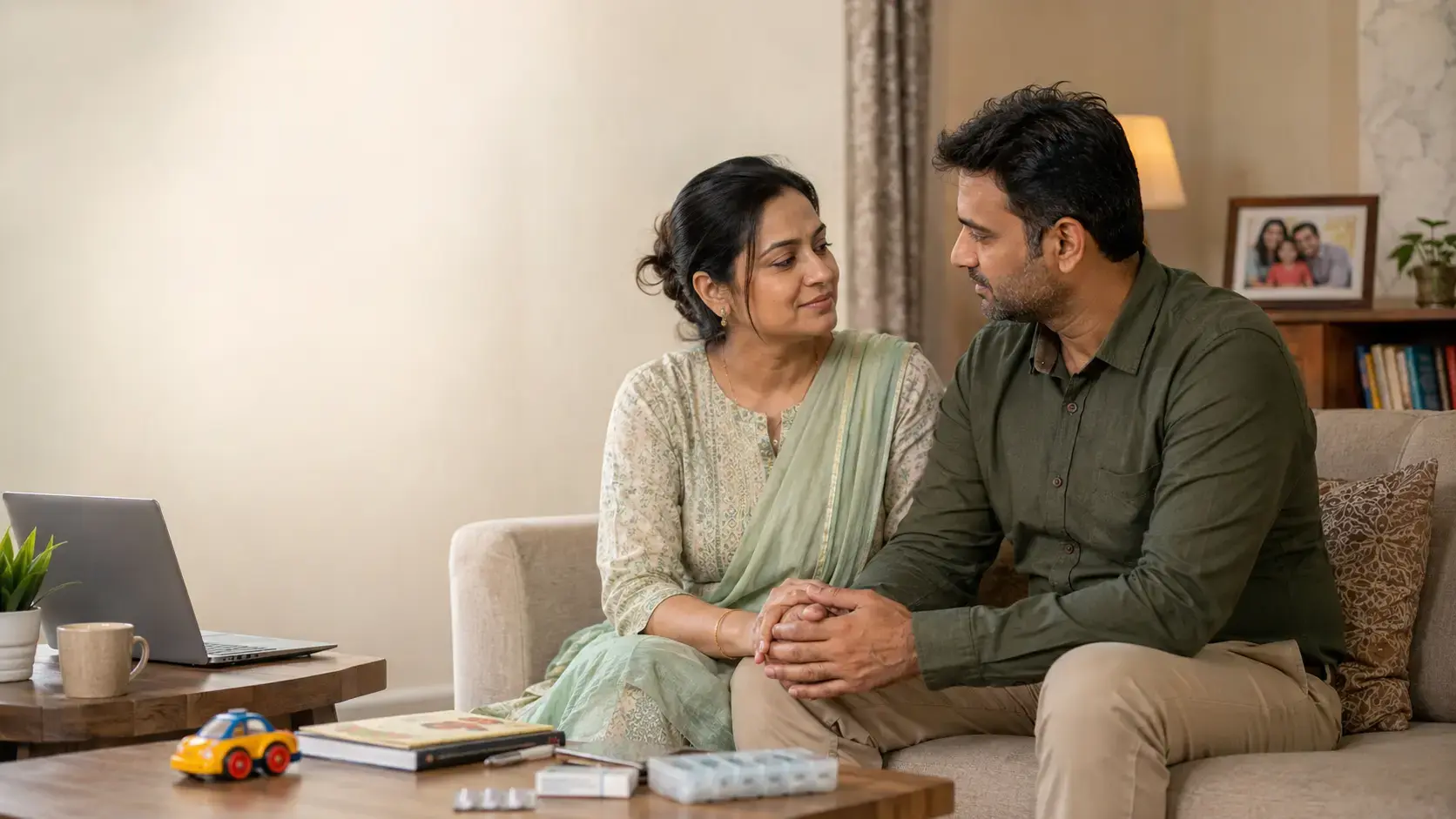
Why Intimacy Changes Across Different Life Stages in a Relationship
Intimacy changes across different life stages because people change. Work pressure, family responsibilities, parenting, health, aging, emotional stress, and personal priorities can all affect how close two partners feel. These changes do not always mean love has disappeared. Often, they mean the relationship needs new understanding, better communication, and more patience.
Why Closeness Does Not Stay the Same Forever
Many people expect intimacy to remain the same throughout a relationship. That expectation sounds romantic, but it is not realistic.
A relationship does not stay in one season. It moves through different stages. Early excitement, marriage responsibilities, parenting pressure, financial stress, health changes, and aging can all change how two people connect.
At one stage, intimacy may feel easy and natural. At another stage, it may need more effort. That does not automatically mean something is wrong.
In many Bangladeshi relationships, people may not openly discuss these changes. A couple may notice emotional distance but avoid talking about it because the topic feels private, awkward, or risky. Some may worry that saying “I feel distant” will sound like blame.
So the change remains unspoken.
And when change is not discussed, it can start to feel like rejection.
The Life-Stage Intimacy Shift
A helpful way to understand this is the Life-Stage Intimacy Shift.
It has three parts:
The relationship changes
Life brings new duties, stress, roles, and priorities.
The person changes
Age, health, emotions, energy, confidence, and needs may shift.
The connection needs to adjust
Couples need new ways to stay close as life changes.
In simple words, intimacy changes because people are not living the same life forever.
The way two people connected early in a relationship may not work the same way after marriage, parenting, work pressure, illness, or aging. The connection may still be there, but it may need a different form.
Early Relationship Closeness Often Feels Easier
At the beginning of a relationship, closeness may feel exciting. People may give more attention, talk more often, and feel curious about each other.
This stage can feel emotionally warm because both people are still discovering each other. Small messages, kind words, and time together may feel special.
But early closeness is not the full test of a relationship.
During this stage, responsibilities may not be as heavy. Family pressure may not be fully visible. Financial stress, household roles, parenting, and long-term routines may not yet be part of daily life.
That is why some couples feel confused later. They may think, “Why are things not like before?”
The honest answer is simple: life is not like before.
The relationship has moved into a different stage.
Marriage Can Bring Comfort, but Also New Pressure
After marriage, intimacy may become deeper for some couples. They may feel more secure, more settled, and more emotionally connected.
But marriage can also bring new pressure.
In Bangladesh, marriage often includes family expectations, household responsibilities, social duties, financial planning, and sometimes limited privacy. A couple may not get enough quiet time to talk honestly.
A newly married couple living with extended family may care about each other deeply. Still, they may struggle to find private emotional space. One partner may expect more closeness. The other may feel overwhelmed by family routines and responsibilities.
Neither person may be wrong.
But if they do not talk, both may feel disappointed.
Marriage does not automatically create emotional comfort. It gives the relationship a new structure. The closeness still needs care.
When Work, Money, and Family Duties Take Over
As life becomes busier, intimacy can quietly move to the background.
Work stress, money concerns, household duties, family care, and daily tiredness can reduce emotional availability. A person may still love their partner but feel too exhausted to show it well.
One partner may return home mentally drained from work. Another may feel unseen after managing family responsibilities all day. Both may be tired. Both may want care. But neither may have the energy to explain it gently.
This is where emotional distance often begins.
Not because love is gone.
But because daily pressure starts replacing real connection.
Couples may still talk, but mostly about tasks. Bills. Food. Children. Parents. Work. Problems.
These conversations are necessary. But if they become the only conversations, intimacy can weaken.
A relationship needs more than responsibility. It also needs small moments of reassurance.
Parenting Can Change the Shape of Intimacy
Parenting can deeply change how couples connect.
After children, time, energy, sleep, privacy, and emotional focus may shift. The relationship may become more about managing the child, household, and family needs.
This can be a beautiful stage, but also a tiring one.
One partner may feel ignored. Another may feel unappreciated. Both may be doing their best, but the couple connection may slowly become secondary.
In many families, parenting support may also come with advice or involvement from relatives. That can help in some ways, but it may also reduce private time between partners.
During this stage, intimacy may need to look different.
It may not always mean long conversations or big romantic gestures. Sometimes it means asking, “Did you eat?” with real care. Sometimes it means giving the other person rest. Sometimes it means noticing effort instead of only pointing out what is missing.
Small care matters when life is heavy.
Aging and Health Changes Can Affect Emotional Comfort
As people grow older, intimacy may change again.
Energy levels, health, confidence, body image, sleep, stress, and personal priorities may shift. Some people become more emotionally reflective. Others become quieter. Some couples grow closer with age. Others feel distant because they never learned to talk about change.
Aging does not reduce the need for closeness. It often changes the way closeness is expressed.
For some couples, emotional comfort becomes more important than excitement. They may value peace, loyalty, care, and understanding more deeply.
But health changes can also create worry or insecurity.
A person may feel less confident. Another may not know how to offer support without making things awkward. If both stay silent, the emotional gap can grow.
The healthier approach is not to pretend nothing has changed. It is to speak with care and patience.
The Common Mistake: Comparing Every Stage to the Beginning
One common mistake is comparing every stage of the relationship to the early stage.
The beginning may feel easier because there are fewer shared burdens. But long-term intimacy has a different kind of depth.
Early closeness often depends on excitement.
Long-term closeness depends more on effort, patience, trust, and emotional repair.
A couple should not panic just because the relationship feels different. Different does not always mean worse.
The better question is not, “Why is it not like before?”
The better question is, “What kind of closeness do we need in this stage of life?”
That question is more useful.
It helps couples stop chasing the past and start caring for the present.
Is This Normal Change or Emotional Distance?
Some changes are normal. Others may need attention.
| Normal life-stage change | Possible warning sign |
|---|---|
| Less time because of responsibilities | Avoiding each other completely |
| Tiredness after work or parenting | Constant coldness or emotional rejection |
| Different needs with age | Refusing to discuss any change |
| Less excitement than the early stage | Loss of care, kindness, or respect |
| Needing more rest or privacy | Feeling afraid, pressured, or unsafe |
Not every change is a crisis. But ongoing distress should not be ignored.
If the relationship still has care, respect, and willingness to talk, the change may be manageable. If there is fear, pressure, repeated conflict, or emotional harm, the issue needs more serious attention.
How Couples Can Stay Connected Through Life Changes
Couples do not need a perfect relationship. They need a flexible one.
A flexible relationship can adjust when life changes.
Here are a few gentle ways to protect connection:
• Talk about what has changed instead of pretending everything is the same.
• Ask what your partner needs in this stage of life.
• Notice effort, especially during stressful seasons.
• Create small private moments, even if they are short.
• Avoid comparing your relationship with social media or other couples.
• Speak about disappointment without turning it into blame.
• Accept that closeness may look different across time.
A couple may not always feel the same level of connection. But they can still choose to return to each other with care.
That choice matters.
The Healthiest Relationships Keep Adjusting
Intimacy changes because life changes. That is not failure. It is part of a long relationship.
The healthiest couples are not the ones who never change. They are the ones who notice change and respond with honesty, patience, and mutual care.
A relationship can survive different life stages when both people stop treating change as a threat and start treating it as a signal.
A signal to listen.
A signal to adjust.
A signal to ask, “How can we stay close in this season?”
Because intimacy is not only about how a relationship began. It is also about how two people keep choosing connection as life keeps moving.
Key Takeaways
• Intimacy can change because life responsibilities, age, stress, health, and priorities change.
• A shift in closeness does not always mean love has disappeared.
• Marriage, parenting, work pressure, and aging can all affect emotional comfort.
• Comparing every stage to the beginning can create unnecessary disappointment.
• Healthy couples adjust their connection instead of pretending nothing has changed.
• Ongoing fear, pressure, distress, or emotional harm should be taken seriously.
When to Seek Professional Help
Consider professional support if changes in intimacy are linked with ongoing distress, fear, pressure, pain, repeated conflict, trauma, emotional withdrawal, or feeling unsafe in the relationship.
Support may also help if conversations always turn into arguments, one partner feels ignored for a long time, or both people feel stuck despite trying to reconnect.
Seeking help does not mean the relationship has failed. It means the concern deserves careful attention.
Safety Note
This article is for general education only and is not a substitute for medical, psychological, or relationship counselling. If you are experiencing ongoing distress, pain, pressure, fear, abuse, trauma, or serious relationship conflict, consider speaking with a qualified professional or trusted support person.