
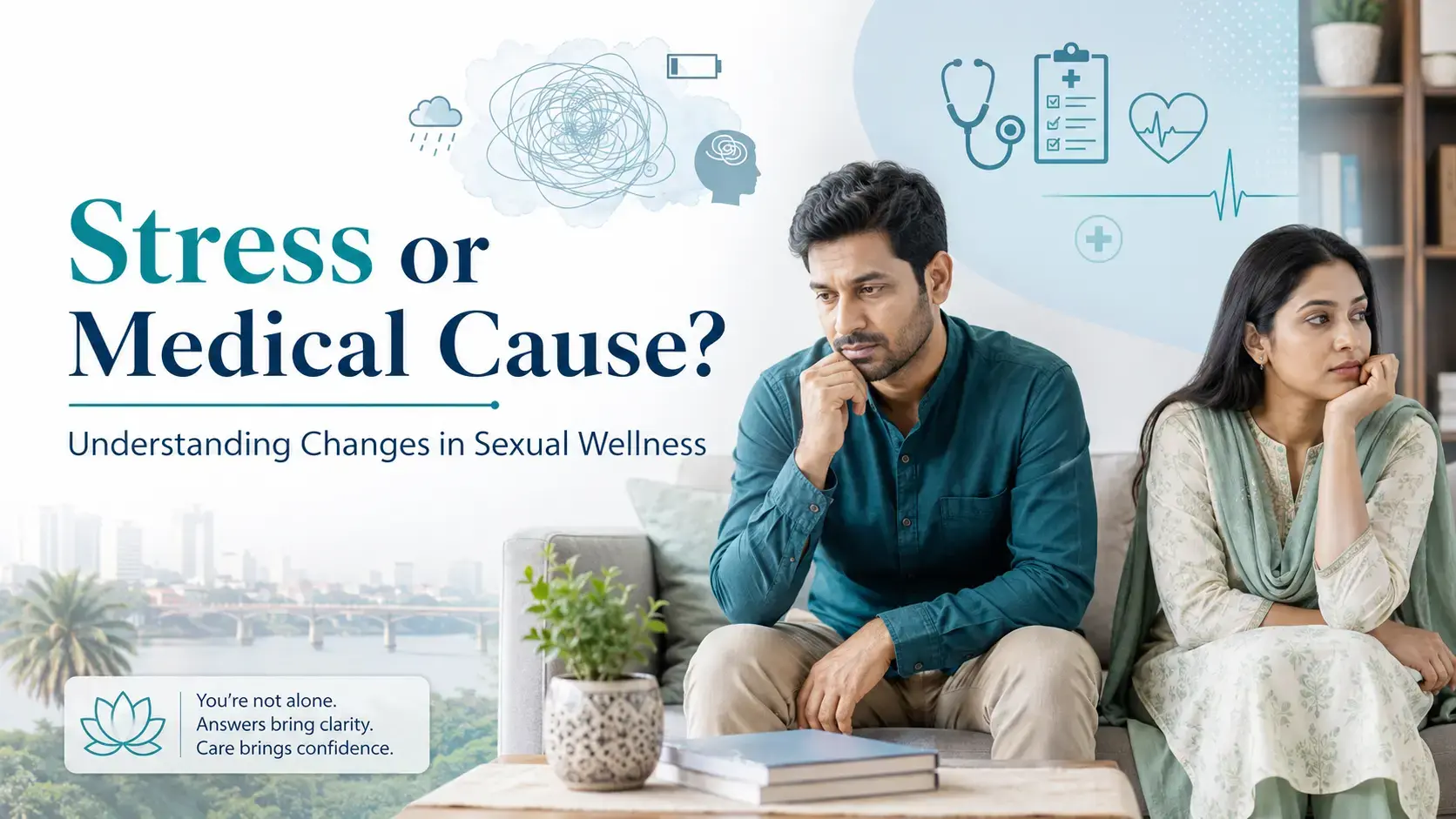
Is It Stress or a Medical Cause? How to Understand Changes in Sexual Wellness
A change in sexual wellness can be confusing when there is no clear reason. One person may think it is only stress. Another may worry it is a medical problem. A partner may quietly feel rejected, while the person experiencing the change may feel pressure, embarrassment, or fear of being misunderstood.
The truth is usually more layered. Stress or medical cause sexual wellness concerns are not always easy to separate. Mental pressure, poor sleep, anxiety, low mood, confidence, relationship tension, medication, hormones, diabetes, heart health, childbirth, menopause, and long-term illness can all overlap.
This article is written for Bangladeshi adult readers who want a respectful, private, and non-judgmental explanation. It does not diagnose your situation. It helps you understand what may be happening, what should not be ignored, and when it may be responsible to speak with a qualified healthcare professional, mental health professional, or relationship counsellor.
Quick Answer
Stress can affect sexual wellness by changing energy, mood, sleep, focus, confidence, and emotional comfort. But stress is not always the full reason. Medical conditions, medication, hormonal changes, pain, fatigue, anxiety, depression, and relationship pressure may also contribute. If the change is sudden, persistent, distressing, or linked with other health symptoms, professional advice is safer than guessing.
Why It Can Be Hard to Tell Stress from a Medical Cause
Sexual wellness is connected with the body, mind, emotions, relationship comfort, and overall health. The World Health Organization describes sexual health as involving physical, emotional, mental, and social wellbeing, not only the absence of disease or dysfunction.
For that reason, a change in desire, comfort, or response may come from more than one direction at the same time. Someone under heavy work pressure may sleep badly, feel emotionally distant, eat irregularly, and become more irritable. Those changes can affect closeness. But the same person may also have blood pressure concerns, diabetes, hormonal changes, depression, anxiety, or medication side effects.
That is why the better question is not only, “Is it mental or physical?”
A safer question is: “What has changed recently in my stress, sleep, mood, health, medication, relationship, and daily routine?”
This question does not diagnose anything. It simply helps you avoid two common mistakes: ignoring a health concern or blaming everything on stress.
How Stress May Affect Sexual Wellness
Stress can affect the body and mood in practical ways. Mayo Clinic notes that stress can affect the body, mood, and behavior, including sleep, fatigue, anxiety, feeling overwhelmed, and changes in sex drive.
In real life, this may show up as:
- Feeling mentally overloaded.
- Having less interest in closeness.
- Feeling tired even after rest.
- Finding it harder to relax.
- Becoming easily irritated.
- Feeling emotionally distant.
- Worrying too much about performance or response.
- Avoiding intimacy because it feels like another pressure.
Stress may also create a cycle. A person notices a change, becomes worried about it, feels pressure to “fix” it, and then the pressure makes comfort even harder.
That does not mean the concern is imaginary. Stress-related changes are real. But stress should not become a lazy explanation for every sexual wellness concern. If the change continues, worsens, or appears with physical symptoms, it deserves proper attention.
Medical Factors That Can Look Like Stress
Some health-related factors can feel similar to stress because they may also affect energy, mood, desire, comfort, or physical response.
Possible overlapping factors may include:
- Diabetes or blood sugar-related concerns.
- Heart health or blood pressure problems.
- Hormonal changes.
- Menopause, pregnancy, childbirth, or breastfeeding-related changes.
- Chronic pain or long-term illness.
- Severe fatigue or poor sleep.
- Medication side effects.
- Depression or anxiety.
- Sexual health concerns that need medical assessment.
NHS lists several possible causes of low libido, including relationship problems, stress, anxiety, depression, sexual problems, pregnancy and having a baby, lower hormone levels with age, and certain medicines such as blood pressure medicine or antidepressants.
Cleveland Clinic also explains that low libido may be short-term or ongoing and can be related to physical health, mental health, stress, aging, and relationship factors.
This is why guessing is not enough. A change may be stress-related, health-related, relationship-related, or mixed.
When Medication May Be Part of the Picture
Medication is one area where many people make mistakes because they feel embarrassed. Do not do that.
Some medicines may affect desire, comfort, or physical response. MedlinePlus notes that antidepressants may cause sexual problems such as lack of desire or ability to have sex. Mayo Clinic also explains that antidepressants can cause sexual side effects and advises speaking with a healthcare professional before changing dose or medication.
This is important: do not stop prescribed medicine on your own.
Stopping or changing medicine without medical advice can create new health risks or worsen the original condition. If a change began after starting, stopping, or changing medication, speak with the doctor or pharmacist who understands your health history.
You do not need to explain everything dramatically. A simple statement is enough: “I noticed a change after starting this medicine. Could it be related?”
Doctors and pharmacists deal with sensitive health concerns professionally. Embarrassment should not block basic care.
Physical Symptoms That Should Not Be Ignored
Some signs deserve medical attention, even if stress is also present.
For men, repeated erection difficulties may sometimes be linked with health concerns such as diabetes, blood vessel problems, nerve-related issues, medication effects, stress, tiredness, anxiety, or depression. MedlinePlus notes that erectile dysfunction can sometimes be a sign of health problems such as clogged blood vessels or diabetes-related nerve damage.
For women, vaginal dryness or discomfort may be linked with menopause, pregnancy, breastfeeding, certain medicines such as hormonal contraceptives or antidepressants, hysterectomy, or some cancer treatments.
Medical attention may be especially important if the change is linked with:
- Pain or physical discomfort.
- Severe tiredness.
- Dizziness or weakness.
- Ongoing low mood.
- Persistent anxiety.
- New or unusual physical symptoms.
- Diabetes, heart disease, high blood pressure, hormonal concerns, or long-term illness.
- Childbirth, menopause, pregnancy, or breastfeeding-related changes.
- Recent medication changes.
- Symptoms that continue or worsen.
This does not mean something serious is definitely happening. It means the body deserves a proper check instead of online guessing.
Patterns Worth Noticing Without Self-Diagnosing
You do not need to become your own doctor. But noticing patterns can help you explain the issue more clearly if you speak with a professional.
Helpful questions include:
- Did the change start suddenly or gradually?
- Did it begin after stress, illness, childbirth, medication, or a major life change?
- Is it occasional, or does it keep happening?
- Is there pain, discomfort, fatigue, dizziness, low mood, anxiety, or sleep trouble?
- Does it happen mainly during relationship pressure?
- Has communication with your partner become tense, silent, or blaming?
- Are you avoiding closeness because of fear, pressure, shame, or past emotional discomfort?
- Is the concern affecting daily life or emotional wellbeing?
These questions are not for diagnosis. They are for clarity.
A temporary change during a stressful week may not mean the same thing as a sudden or persistent change with physical symptoms. A pattern that improves with rest and lower pressure may be different from a pattern that continues despite improved routine.
This is the part many people skip. They want one quick answer. But real health is not that neat.
Relationship Pressure Can Make the Problem Worse
A sexual wellness change can quickly turn into a relationship issue when both partners start guessing.
One partner may think, “Maybe they are not attracted to me anymore.”
The other may think, “Something is wrong with me.”
Then both people may become defensive, quiet, hurt, or frustrated.
This is how a health or stress concern becomes an emotional fight.
A safer approach is to speak calmly and avoid blame. The goal is not to prove who is right. The goal is to understand what has changed and what support may be needed.
For example, an adult partner may say:
“I have noticed some changes in my stress, energy, and comfort. I do not want us to blame each other. I want to understand whether this is stress-related, health-related, or something we should get advice about.”
That is not therapy. It is basic respectful communication.
Pressure, guilt, comparison, criticism, or repeated questioning can make sexual wellness concerns worse. Emotional safety matters. If either partner feels controlled, humiliated, forced, or unsafe, the issue needs serious attention and may require professional support.
Bangladesh Context: Privacy, Shame, and Delayed Help
In Bangladesh, many adults feel uncomfortable discussing sexual wellness, mental health, desire changes, anxiety, medication side effects, or relationship discomfort. Privacy concerns are common. People may worry about being judged by family, society, pharmacy staff, doctors, or even their partner.
That silence can delay help.
Some people search online privately but then follow unsafe advice from social media, random forums, or product sellers promising quick solutions. That is risky, especially when the concern may involve medication, diabetes, heart health, hormones, depression, anxiety, pain, or long-term stress.
A sexual wellness concern does not automatically mean weakness, lack of love, moral failure, or relationship failure. Mental stress is not shameful. Medical symptoms are not shameful. Asking for professional help is not shameful either.
For Bangladeshi adults, the safer path is respectful privacy plus responsible care. Choose a qualified doctor, mental health professional, or relationship counsellor when the issue is ongoing, distressing, sudden, or linked with health symptoms.
When It May Need Professional Help
Speak with a qualified healthcare professional if the change is sudden, persistent, worsening, painful, physically concerning, or linked with other symptoms.
Medical advice may be important if the concern appears with:
- Pain or discomfort.
- Severe fatigue.
- Dizziness.
- Weakness.
- Ongoing sleep problems.
- Low mood.
- Persistent anxiety.
- Panic-like feelings.
- Diabetes, heart disease, high blood pressure, hormonal issues, or long-term illness.
- Medication changes.
- Pregnancy, childbirth, breastfeeding, or menopause-related changes.
- Any symptom that feels unusual for your body.
A mental health professional or relationship counsellor may be helpful if:
- Anxiety or fear affects intimacy comfort.
- Low mood affects daily life.
- Emotional strain is causing avoidance or distress.
- Communication repeatedly turns into conflict.
- One or both partners feel blamed, rejected, pressured, or misunderstood.
- Past emotional pain affects closeness.
- Either partner feels unsafe, controlled, humiliated, or emotionally harmed.
Professional support is not a quick fix. It should not be treated like magic. But for some adults, it can provide a safer space to understand stress, confidence, anxiety, emotional pressure, and relationship patterns without blame.
What Not to Do
Do not assume the concern is only psychological.
Do not assume it is always medical either.
Do not blame yourself immediately.
Do not blame your partner immediately.
Do not treat low desire as proof of lack of love.
Do not compare your relationship with friends, social media, movies, or unrealistic online content.
Do not pressure, guilt, shame, threaten, or criticize your partner.
Do not self-diagnose from one sign.
Do not stop prescribed medicine without medical advice.
Do not take random pills, supplements, or “performance” products based on online claims.
Do not ignore sudden, painful, persistent, or worsening symptoms because of embarrassment.
Do not rely only on social media advice.
Do not force sensitive conversations during anger if it makes things worse.
Do not treat silence as proof that the relationship has failed.
Do not minimize anxiety, depression, fear, emotional distress, or past emotional pain.
This is where many people create more damage. They panic, blame, hide, or try random solutions. That is not smart. Slow down, notice the pattern, and get qualified help when needed.
Short Summary
Changes in sexual wellness can happen for many reasons. Stress may affect energy, sleep, mood, confidence, focus, and intimacy comfort. But medical conditions, medication, hormones, chronic illness, pain, anxiety, depression, and relationship pressure may also overlap. The safest approach is not to guess, blame, panic, or follow random online advice. Notice patterns, avoid pressure, protect emotional safety, and seek qualified support if the concern is sudden, persistent, distressing, worsening, or linked with health symptoms. For Bangladeshi adults, privacy matters, but embarrassment should not delay responsible care.
Reference links:
World Health Organization — Sexual Health
NHS — Low Sex Drive / Loss of Libido
Mayo Clinic — Stress Symptoms: Effects on Your Body and Behavior
Final Disclaimer
This article is for educational purposes only and is not a substitute for professional medical advice, diagnosis, treatment, mental health support, therapy, or relationship counselling. If you have ongoing, sudden, distressing, or concerning symptoms, or if emotional or relationship concerns are affecting your wellbeing, speak with a qualified healthcare professional, mental health professional, or relationship counsellor.