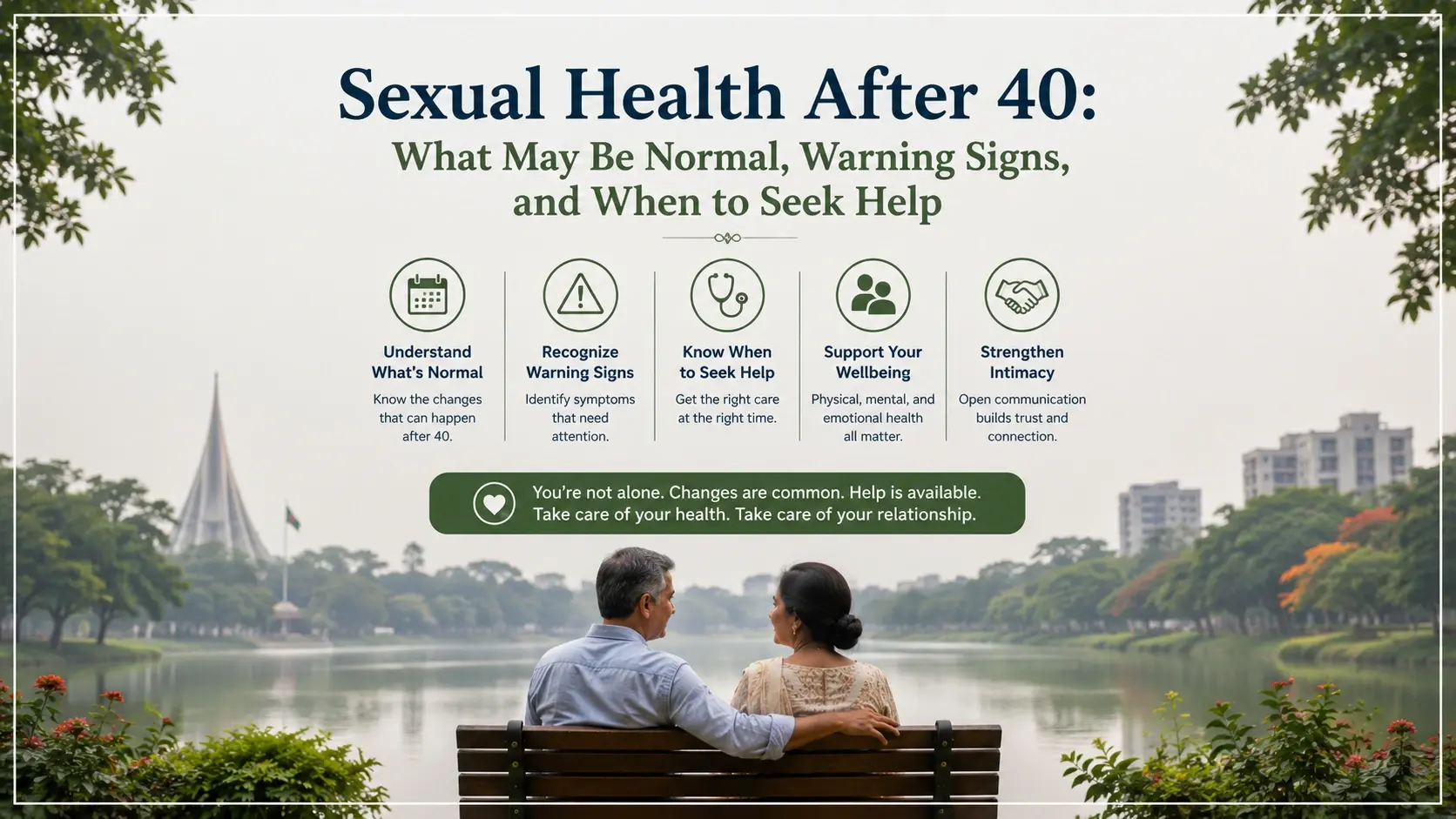
Sexual Health After 40: What May Be Normal, Warning Signs, and When to Seek Help
Something feels different: less interest, less energy, an unreliable physical response, discomfort, or a sense that closeness no longer comes as easily. After 40, it is tempting to explain every change with one word—age. That answer is neat, but often wrong.
Sexual health after 40 reflects more than a birthday. Sleep, work pressure, physical illness, hormones, medicine, mood, privacy, and the quality of a relationship can all shape what a person notices. Sometimes the change is brief and settles when life becomes less demanding. Sometimes it is the first reason to look more closely at general health.
Some changes in sexual health after 40 are gradual, mild, or temporary, especially during poor sleep, illness recovery, stress, or a major routine change. Age alone does not explain a symptom. Arrange a health review when the change keeps returning, causes pain or distress, gets worse, follows a medicine change, or appears alongside other physical symptoms. Serious cardiovascular symptoms need urgent assessment.
One Incident Says Little; the Pattern Says More
A single difficult evening cannot tell you whether the cause was exhaustion, worry, discomfort, medicine, hormones, or something else. Look at the pattern before attaching a label.
Five clues are especially useful:
- Context: What was happening when the change began? Consider illness, poor sleep, long work hours, fasting, travel, financial strain, caregiving, conflict, or a change in privacy.
- Duration: Was it an isolated experience, an occasional issue, or something that has continued for weeks or months?
- Distress: Is it simply different, or is it creating pain, worry, avoidance, reduced confidence, or tension at home?
- Direction: Is the situation settling, staying the same, or becoming more frequent or difficult?
- Accompanying symptoms: Did anything else change—urination, vaginal bleeding, energy, mood, breathing, chest comfort, blood-glucose control, or general health?
These clues are not a diagnostic test. They do something more realistic: they help separate a reasonable period of observation from a situation that needs proper assessment.
| Pattern | What to do next |
|---|---|
| Mild, occasional, linked to a short-term stressor, and improving | Give it time, reduce pressure, and notice whether the pattern settles |
| Repeated, painful, distressing, unexplained, or getting worse | Book an appointment with an appropriate clinician |
| Chest discomfort, severe breathing difficulty, fainting, or severe rapidly worsening symptoms | Seek urgent local medical care |
The middle row matters most. Many people wait because the situation is not an emergency. That does not mean it deserves endless delay.
Some Changes Belong to a Difficult Season, not a Diagnosis
Sexual wellbeing responds to ordinary life. A month of broken sleep, an infection, a demanding work schedule, financial worry, grief, parenting pressure, or caring for an unwell relative can reduce energy and interest. Limited privacy can also make closeness feel rushed or difficult, especially in a shared household.
A short-term change is less concerning when there is a clear context, no pain or alarming symptom, and the situation improves as the pressure passes. Examples include lower interest during illness recovery, a temporary confidence dip after one difficult experience, or less opportunity for closeness during an unusually demanding period.
This is where people often create unnecessary damage. One partner sees tiredness and reads rejection. The other feels examined and becomes even more tense. Neither interpretation proves what is happening.
Time can be reasonable when the change is mild and clearly improving. Silence is less useful when it keeps returning or begins to affect wellbeing. “Temporary” should describe what the pattern is doing, not become an excuse to ignore it.
Age Rarely Acts Alone
Midlife brings several influences into the same room. The body changes, responsibilities change, and existing health conditions often become more visible. The cause of a sexual-health concern is therefore often layered rather than singular.
General health and circulation
Sexual response depends partly on blood flow, nerve signals, energy, and physical comfort. Diabetes can affect blood vessels and nerves over time, which is why sexual and bladder concerns deserve attention in people living with diabetes. Cardiovascular conditions, high blood pressure, and other long-term illnesses can also be relevant.
This does not mean that erection difficulty proves heart disease or that vaginal discomfort proves diabetes. It means general health belongs in the assessment. A recurring sexual-health concern should not be treated as a separate, embarrassing problem with no connection to the rest of the body.
Perimenopause and menopause
Perimenopause and menopause do not look the same for every woman. Sleep disturbance, reduced desire, vaginal dryness, irritation, urinary symptoms, and discomfort are among the recognised possibilities. Some women have few symptoms; others find that symptoms affect daily life or relationships.
Menopause should not be used as a catch-all explanation. Infection, diabetes, medicine, pelvic conditions, and other health issues can overlap. Vaginal bleeding after 12 months without a period needs clinical assessment, even if it happens only once.
Erectile function and hormone questions
Erection difficulties can involve blood-vessel, nerve, hormonal, medicine-related, emotional, or lifestyle factors. An occasional problem during stress or exhaustion is not the same as a repeated pattern. When it keeps happening, becomes more frequent, or causes distress, it deserves a health conversation—not a masculinity test.
Tiredness, lower desire, mood changes, and erection difficulty are sometimes blamed on “low testosterone” without evidence. Those symptoms overlap with poor sleep, diabetes, thyroid conditions, cardiovascular health, medicine, stress, and low mood. A hormone conclusion needs a proper history and, when clinically appropriate, testing.
Medicine
Some prescription and non-prescription medicines affect desire, energy, comfort, lubrication, or erectile response in some people. The timing can offer a clue, particularly when a change begins after a medicine is started or adjusted.
The wrong response is to stop treatment on your own. The health condition being treated may also affect sexual wellbeing, and an abrupt change can cause harm. Take a full medicine and supplement list to a doctor or pharmacist and ask for a review.
Sleep, stress, and emotional wellbeing
Poor sleep drains energy and patience. Anxiety can turn one difficult experience into a cycle of anticipation and tension. Low mood can reduce interest in activities that once felt enjoyable. At the same time, physical symptoms should not be dismissed as “all in the mind.”
The body and mind do not operate in separate departments. A clinician may need to consider both, especially when worry, persistent low mood, or loss of confidence is affecting daily life.
Relationship climate
Affection can remain strong while desire or physical comfort changes. Long-term relationships also carry routines, unresolved disagreements, household work, parenting, caregiving, and expectations. Pressure makes most health concerns harder to discuss.
Relationship context matters, but it is not a shortcut diagnosis. A medical issue should not be blamed on the marriage, and relationship strain should not be hidden behind a medical label.
In Bangladesh, the First Barrier Is Often the Conversation
Privacy is not a minor issue. In Bangladesh, someone may live in a crowded home, know the staff at the local pharmacy, rely on relatives for transport, or fear being judged by a spouse or clinician. A person may postpone care simply because they do not know how to name the concern.
Start with health facts. At reception, you can request a private consultation for a personal health concern. In the consultation, explain what changed, when it began, and whether it is improving or getting worse. That is enough to open the discussion.
Before the appointment, note:
- the main change and its approximate start date;
- how often it happens;
- pain, dryness, bleeding, urinary changes, fatigue, dizziness, breathing difficulty, or chest discomfort;
- recent illness, surgery, major stress, sleep disruption, or menopause-related change;
- diagnosed conditions;
- prescribed medicines, over-the-counter products, and supplements;
- any medicine adjustment near the start of the problem;
- the effect on mood, confidence, and the relationship.
A general physician or family doctor is often a sensible starting point. Referral may then be made to a gynecologist, urologist, endocrinologist, cardiologist, pharmacist, mental-health clinician, or relationship counsellor according to the actual concern.
Bring a timeline rather than a diagnosis copied from social media. It is far more useful.
Avoid the Shortcuts That Create More Confusion
Labels such as “just age,” “only stress,” or “my partner no longer cares” turn uncertainty into a false conclusion. One symptom is also nowhere near enough to diagnose menopause, low testosterone, diabetes, heart disease, or a mental-health condition.
Stopping prescribed medicine without guidance is unsafe. So is buying unverified pills, sprays, hormones, or supplements because an advertisement promises a fast result. These shortcuts can delay proper assessment and create additional risk.
Pain is not an obligation. Erection difficulty is not a measure of masculinity, and lower desire is not a loyalty test. Social media should never be the final authority on a persistent health concern.
The sensible response is rarely dramatic: notice the pattern, remove blame, and seek the right level of help.
Final Disclaimer
“This article is for educational purposes only and is not a substitute for professional medical advice, diagnosis, treatment, mental health support, therapy, or relationship counselling. If you have ongoing, sudden, distressing, painful, worsening, or concerning symptoms, or if emotional or relationship concerns are affecting your wellbeing, speak with a qualified healthcare professional, mental health professional, or relationship counsellor.”
References
1. Sexual Health
Source organization: World Health Organization
Link: https://www.who.int/health-topics/sexual-health
Supports: The broad framing of sexual health as physical, emotional, mental, and social wellbeing, with respect and freedom from coercion.
2. Sexuality and Intimacy in Older Adults
Source organization: National Institute on Aging, US National Institutes of Health
Link: https://www.nia.nih.gov/health/sexuality/sexuality-and-intimacy-older-adults
Supports: The explanation that health conditions, medicines, stress, worry, and bodily changes can influence sexuality and intimacy across later life.
3. Sexual Problems in Men
Source organization: MedlinePlus, US National Library of Medicine
Link: https://medlineplus.gov/sexualproblemsinmen.html
Supports: The distinction between occasional problems and concerns that persist or cause distress, and the role of illness, medicine, stress, and emotional factors.
4. Symptoms & Causes of Erectile Dysfunction
Source organization: National Institute of Diabetes and Digestive and Kidney Diseases, US National Institutes of Health
Link: https://www.niddk.nih.gov/health-information/urologic-diseases/erectile-dysfunction/symptoms-causes
Supports: The multi-factor explanation of erection difficulties, including vascular, neurological, hormonal, medicine-related, and emotional contributors.
5. Diabetes, Sexual, & Bladder Problems
Source organization: National Institute of Diabetes and Digestive and Kidney Diseases, US National Institutes of Health
Supports: The relationship between diabetes, blood-vessel and nerve damage, sexual changes, and bladder symptoms in men and women.
6. Symptoms of Menopause and Perimenopause
Source organization: National Health Service, UK
Link: https://www.nhs.uk/conditions/menopause-and-perimenopause/symptoms/
Supports: Variation in menopause and perimenopause symptoms, including sleep, mood, desire, vaginal, urinary, and postmenopausal bleeding guidance.
7. Sexual Activity and Heart Disease
Source organization: American Heart Association
Supports: The advice that sexual activity is probably safe for many people with stable heart disease, while unstable or severe symptoms require assessment and stabilisation.
8. Talking With Your Doctor
Source organization: MedlinePlus, US National Library of Medicine
Link: https://medlineplus.gov/talkingwithyourdoctor.html
Supports: Preparing a symptom timeline, bringing a full medicine and supplement list, asking questions, and communicating honestly during an appointment.